

































On 5 June, leaders of the European Union’s 27 member states traveled to Tivat for the first EU-Western Balkans Summit ever hosted in Montenegro.
The symbolism was hard to miss. For Montenegro, the message from EU leaders was clear: keep moving forward.
For the rest of the Western Balkans, the summit signalled a renewed though uneven commitment to enlargement, including for the first time a more structured approach to gradual integration on the path to full membership.
Namely, in the non-paper developed jointly by France and Germany as two leading forces of the EU, concrete measures such as full access to Single Market, observer status in EU institutions and participation in different EU agencies and programs are offered at the table.
Montenegro: In pole position for EU integration
Podgorica entered the EU-WB Summit having provisionally closed 14 of the 33 negotiating chapters, while Brussels already drafting an accession treaty and 2028 set as the ambitious yet realistic target for EU membership. With two additional chapters expected by the Montenegro government to bile closed by the end of June, the goal seems closer by every day.
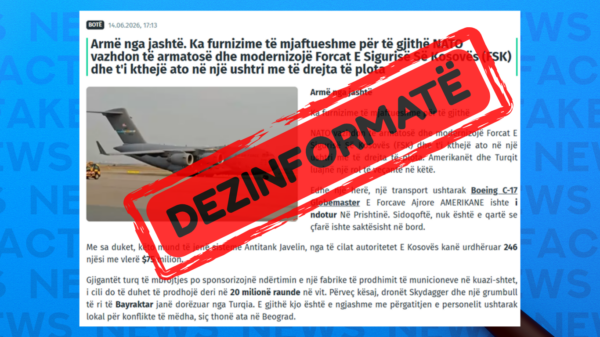
Simultaneously, Podgorica has passed an important security test by returning plane with supporters of President Vucic which could potentially create incidents at the summit and create impression that Montenegro is not ready to join the EU.
Everything appears to be going well for Montenegro as it continues its steady progress toward EU membership at a relatively faster pace than its neighbors.
Albania: The new frontrunner
If Montenegro is the model, Albania is the surprise. Once decoupled from North Macedonia in October 2024, it has gradually overtaken North Macedonia and Serbia and sits in a two-country lead group with Montenegro.
Just ten days before the summit in Tivat, the eighth EU-Albania Accession Conference confirmed Albania’s fulfilment of the interim benchmarks for Cluster 1 (Fundamentals) and set closing benchmarks for the cluster.
This is a major step in the accession process. Albania opened all six clusters in just over a year, has completed screening across all 33 chapters by November 2025, and Tirana aims to complete negotiations by 2027 and enter the Union in 2030.
However, recent protests in Albania may complicate this trajectory. The “Flamingo Revolution” has drawn attention to allegations of environmental mismanagement, corruption, and weak governance linked to a controversial resort project in the protected Vjosa-Narta wetlands. As EU accession requires compliance with environmental standards and the rule of law, continued criticism from Brussels could slow Albania’s membership progress.
North Macedonia: trapped in the Bulgarian labyrinth
The contrast with North Macedonia is stark. Twenty years after gaining EU candidate status, North Macedonia’s path has been repeatedly blocked by vetoes, first from Greece and then from Bulgaria. In 2026, it remains stalled over Bulgaria’s demand that ethnic Bulgarians be recognised in the constitution, a condition now embedded in the EU negotiating framework.
Prime Minister Hristijan Mickoski has refused to begin the constitutional amendment until Skopje receives guarantees that no further Bulgarian conditions will follow, assurances that Sofia is unwilling to provide. The European Commission has reiterated that the constitutional changes remain mandatory.
With little appetite for reform within North Macedonia’s government, it is hard to see progress in the foreseeable future, as the country remains trapped in the Bulgarian veto.
Serbia: A reminder that the EU accession process can move backwards
Serbia has long been considered a frontrunner in the EU enlargement process. However, no new negotiating chapters have been opened in the past five years, and European Parliament rapporteur Tonino Picula has deemed Serbia’s stated 2026 accession goal unrealistic.
In Serbia, backsliding on key fundamentals, including media freedom, judicial independence, and electoral integrity, has been documented in successive Commission reports and reaffirmed in a May 2025 European Parliament resolution, which raised serious concerns about systemic issues highlighted by recent protests.
Simultaneously, student-led protests have emerged as a real political force. The November 2024 collapse of the Novi Sad station canopy, which killed sixteen people, triggered largest mobilization in Serbia’s modern history and has shaken the political system and the Vucic government.
Amid large-scale protests and democratic backsliding, Serbia is increasingly moving away from EU enlargement.
Bosnia and Herzegovina and Kosovo: still waiting at the door
Despite failing to meet all 14 European Commission priorities, Bosnia and Herzegovina was granted candidate status and later, in March 2024, approval to open accession negotiations, steps widely seen as driven more by broader EU enlargement momentum (including Ukraine and Moldova) than by domestic reform progress.
However, persistent internal divisions, strains on the Dayton framework, and the announced departure of High Representative Christian Schmidt continue to limit prospects for meaningful reform in a deeply fragmented political system.
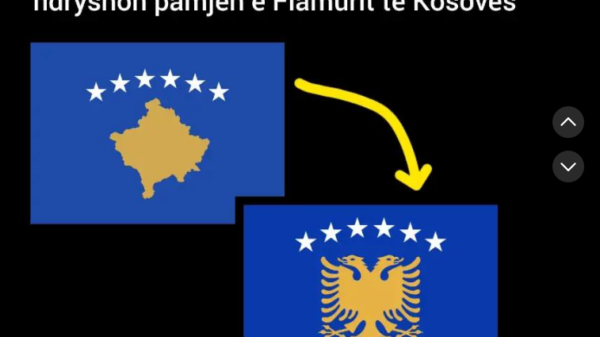
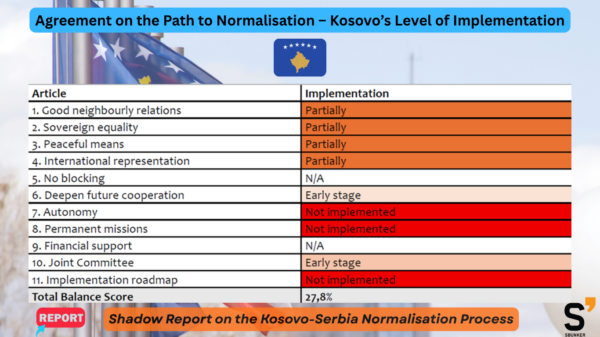
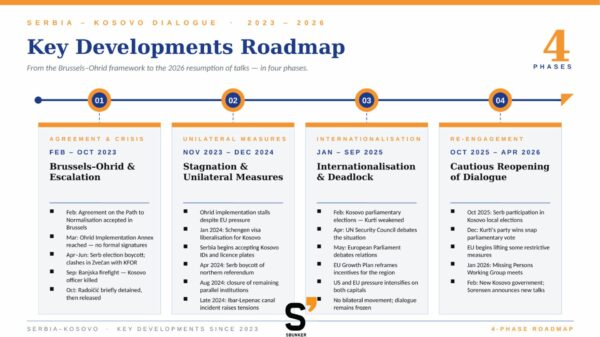
On the other hand, Kosovo remains the only Western Balkan country that is not even an EU candidate. Its membership application has been sitting in the drawer since December 2022, while Pristina has spent 2025 and 2026 moving from one political crisis to another: a dissolved parliament, a failed presidential vote, and a third snap general election in 16 months.
Beyond these internal political challenges, Kosovo also faces a well-known structural obstacle: five EU member states still do not recognize its independence, and there is limited political will among key actors such as Germany and France to place the issue higher on the EU agenda.
Tivat Confirms a Divided Enlargement Path
The Tivat Summit did not bring any tangible gains for Bosnia and Kosovo. Both remain on the sidelines, still far from the accession track and with limited prospects of catching the current enlargement window.
While attention was focused on frontrunners such as Montenegro and Albania, leaders also signaled to Serbia and North Macedonia that progress is still possible if reforms are delivered. Bosnia and Kosovo, however, remain largely excluded from this dynamic, with no clear indication of a pathway to close the gap.
The takeaway from Tivat is clear: Montenegro and Albania show that enlargement can still work when there is real political will on both sides. Elsewhere, the question is whether the EU is ready to move beyond words and make clear commitments, resolving North Macedonia’s veto deadlock, a firmer response to Serbia’s democratic backsliding, a clear strategy for Bosnia, and a timeline for Kosovo’s candidacy.
Author