








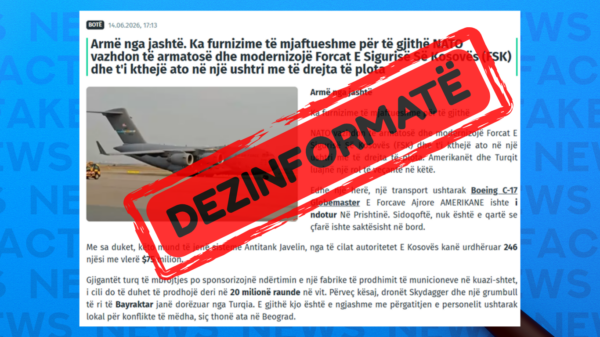
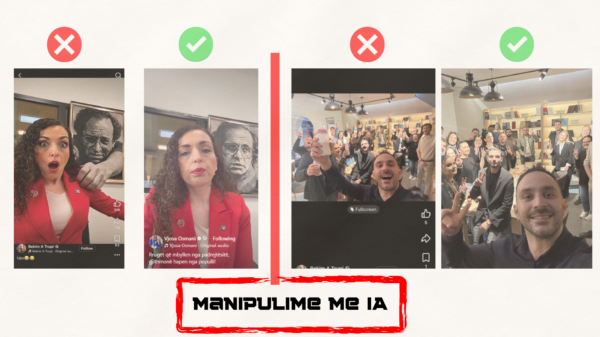
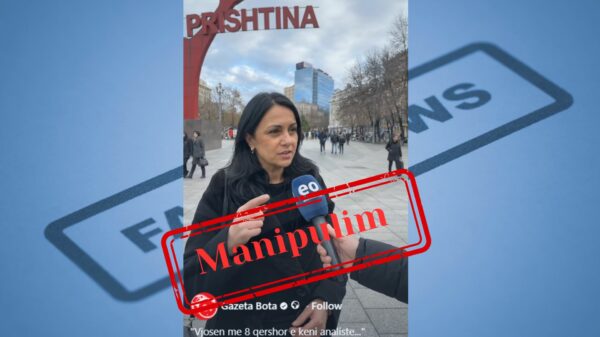
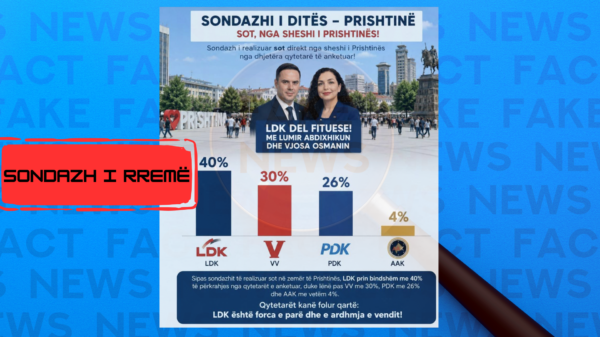











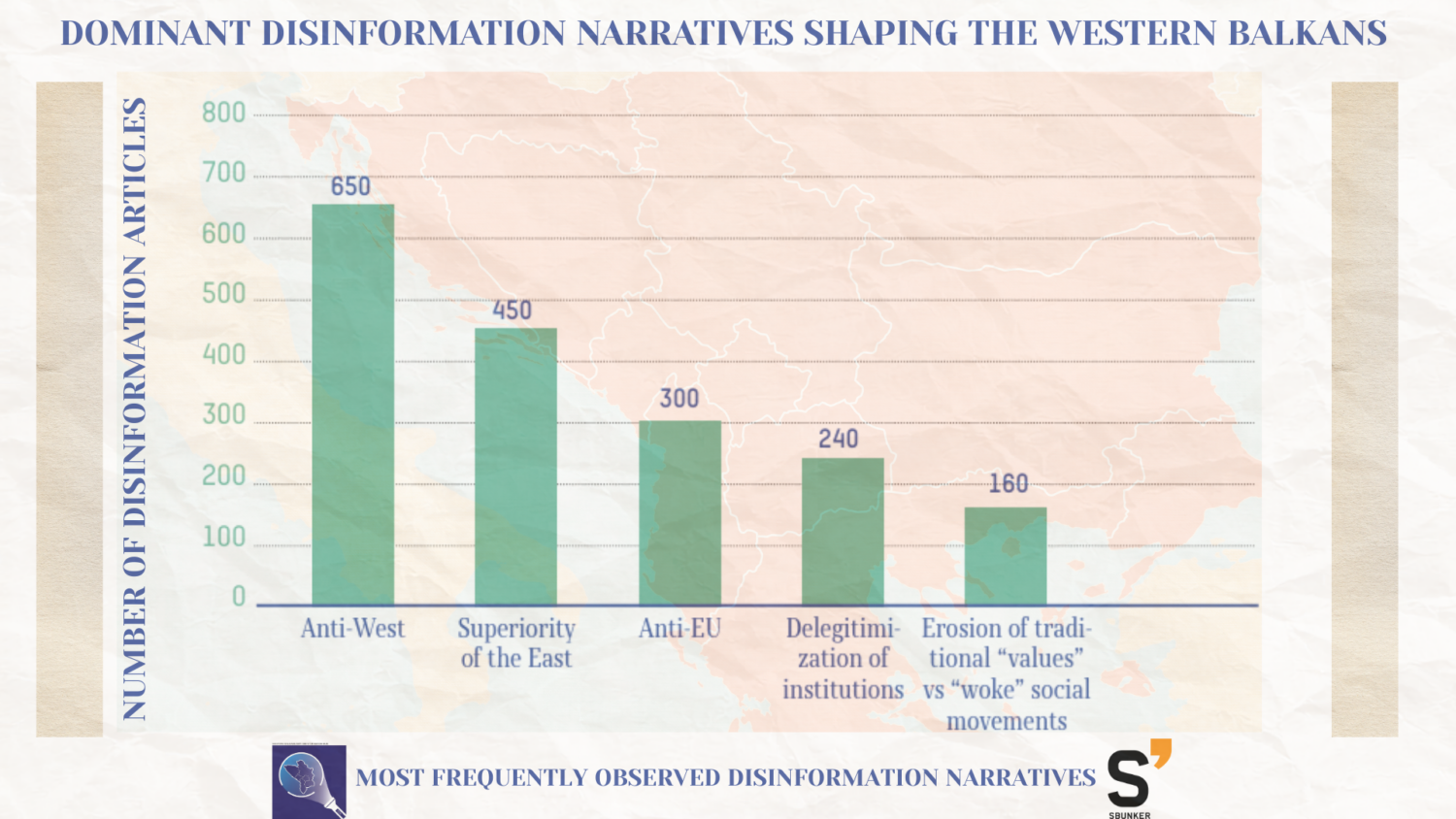
In order to identify these trends, the analysis draws on data collected within the Western Balkans AntiDisinformation Hub: Exposing Malign Influences through Watchdog Journalism project. The project developed a Knowledge Hub database containing more than 6,000 disinformation articles, in-depth stories, and analyses, systematically categorized by media outlet, author, country, and dominant narratives, enabling quantitative mapping and comparative analysis of recurring disinformation patterns across the region. Throughout 2024, disinformation in the Western Balkans largely promoted geopolitical polarization, portraying the West as hostile and destabilizing while presenting the East, particularly Russia and the Orthodox Christian world, as a positive and superior alternative. Western actors were blamed for the war in Ukraine, accused of interfering in regional politics, and portrayed as controlling Western Balkan governments. In parallel, anti-EU narratives depicted the European Union as dishonest and unwilling to genuinely integrate Western Balkan countries, while domestic institutions were delegitimized as weak, ineffective, or merely puppets of the EU or the West. Cultural and identity-based narratives also played a key role, particularly through gender-related disinformation, which framed Western values as a threat to traditional culture and social norms. These narratives frequently intertwined and reinforced one another, creating a broader, coherent picture of Western decline and Eastern superiority. While largely similar across the region, they were often tailored to specific national contexts, adapting themes and messaging to resonate with local political dynamics and sensitivities within individual Western Balkan countries.
The Euro-Atlantic Trajectory
The Euro-Atlantic trajectory faces a paradoxical reality. Formally, there is a renewed momentum for enlargement, driven by the EU’s recognition of the region’s strategic importance following the invasion of Ukraine. However, experts note that true progress is obstructed by “reform fatigue” and the unwillingness of local elites to implement rule-of-law reforms that would undermine their own power. The lack of real political will by the EU to enforce real reforms is noted in the region. During the presentation of the 2025 European Commission (EC) progress reports, Albania and Montenegro were presented as regional outliers, with high chances of finishing the EU accession negotiations and gaining membership in several years. The EC either offered stark criticism of backsliding for the other countries, or barely mentioned them, implying a lack of progress. Montenegro is positioned at a crossroads; the country aims for EU accession by 2028. However, it faces intense hybrid pressure from Russian and Serbian proxies designed to derail this timeline by preserving institutional dysfunction and stalling real implementation of reforms. Despite opening accession negotiations, Bosnia and Herzegovina has failed to submit a credible reform package. The leadership of the Republika Srpska entity continues to pursue a secessionist agenda, eroding state authority and stalling the country’s alignment with European standards. The EU path for North Macedonia remains blocked by polarized domestic politics and external vetoes, despite the clear strategic necessity of integration. The Government takes declarative actions that do not result in tangible steps.
The Vacuum of Influence
The reduction of U.S. support for democracy promotion, specifically the cutting of USAID funding, has created tangible vulnerabilities. The U.S. withdrawal signals to Western Balkan actors that the region has been downgraded on the priority list of the new U.S. administration, which dissolved the post of special representative for the region. This perceived disengagement widens the space for malign foreign interference, as Russia and China exploit the vacuum to project influence through economic leverage and information operations. The discontinuation of U.S. support had a direct and negative impact on efforts to build resilience against malign disinformation in the Western Balkans. This included the premature termination of a fiveyear USAID project aimed at mainstreaming media literacy within the public education system in North Macedonia, which was not subsequently sustained by national authorities. More broadly, the withdrawal of U.S. funding exacerbated an ongoing crisis in professional media viability. The reduction and withdrawal of this funding, including funds distributed by the U.S. Congress and private foundations that decided to shift priorities, left many independent media outlets struggling to remain operational. Interviewed experts warn that the EU seems to fail to fill this vacuum, which allows anti-EU strategies to flourish within the region. Furthermore, the vacuum has compromised the perceived reliability of international security guarantees; in Bosnia and Herzegovina, for instance, uncertainty surrounding the renewal of the EUFOR Althea mandate threatened by Russian obstructionism at the UN has deepened local anxieties and exposed the fragility of the peace architecture that has held the region together for decades.
The Anatomy of Information Threats: Narratives and Tactics
During 2024 and 2025, information manipulation evolved from sporadic propaganda into a sophisticated, cross-border system of hybrid warfare. The primary objective of these campaigns is to undermine public trust in Western institutions (NATO and the EU) and delegitimize domestic democratic processes. The information war is fought with specific, recurring narratives adapted to local contexts but sharing a common strategic aim. In Serbia, state officials and pro-government media routinely frame legitimate civic protests such as those following the Novi Sad railway station tragedy as foreign-sponsored attempts to overthrow the government. This narrative claims that Western powers are orchestrating a “Serbian Maidan” (echoing Russian claims that Ukraine’s 2014 Euromaidan was Western-orchestrated rather than a genuine popular uprising). In Kosovo, disinformation campaigns amplify ethnic divisions by framing political disputes as existential threats, such as claims that “Kosovo plans to expel all Serbs.” Similarly, in Bosnia and Herzegovina, narratives portray the West as a destabilizing force threatening Serb autonomy. Narratives denying war crimes and distorting the history of the 1990s are pervasive, used to fuel interethnic hatred and prevent reconciliation. There are some country-specific vulnerabilities. In Kosovo, a dangerous dimension of information warfare has emerged via Telegram channels (e.g., “Bunker,” “Koridor”). These channels act as “informational weapons,” transforming local security incidents into calls for nationalist mobilization within minutes, bypassing traditional moderation. Furthermore, despite official bans, sanctioned Russian outlets like RT and Sputnik remain accessible through some internet providers, including the public telecom operator. In Serbia, media pluralism is non-existent; through control over the most consumed traditional media outlets—and their digital and social media presence—the state saturates almost 95% of the media landscape (combined traditional and online) with controlled content. North Macedonia faces sophisticated “bot farms” and coordinated online attacks that are spreading disinformation campaigns falsely claiming the army was being weakened to support Ukraine, aiming to erode credibility in NATO policies. Discrediting the EU integration process with nationalist narratives of victimization has become commonplace among high-ranking officials. Montenegro, while noted as an outlier in the EU accession process, faces risks of renewed instrumentalization of ethnic tensions and religious institutions as levers by regional hybrid actors. Similar patterns were already observed during Montenegro’s accession to NATO, when coordinated political pressure, destabilizing incidents, and influence operations sought both to obstruct the accession process and to undermine the country’s strategic orientation after membership was secured. While less susceptible to direct Russian narratives than its neighbors, Albania is vulnerable to sensationalist “clickbait” models where unidentified portals spread disinformation about regional tensions or opponent attacks to generate traffic. This, however, does not exclude FIMI, which the Special Parliamentary Commission against Disinformation has identified as coming from Russia, China, and Iran, aiming to influence public opinion and democratic processes.
Election Integrity: The Mechanics of Manipulation
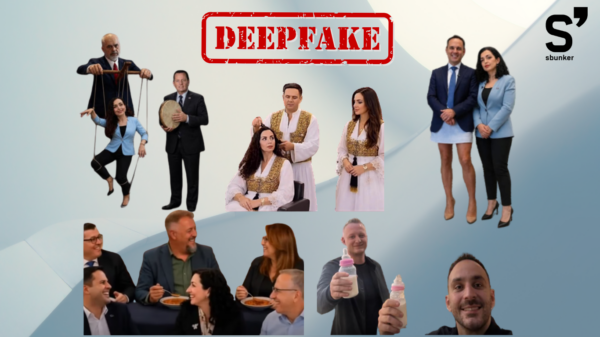
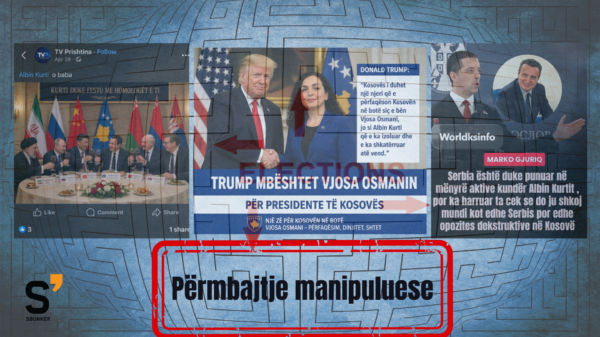
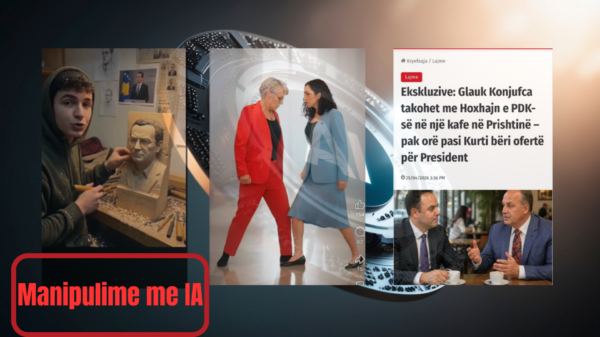
Elections in 2024 were a focal point for information threats, revealing deep structural vulnerabilities across the region. The integrity of the electoral process is increasingly compromised not just by external interference, but by domestic actors who use it to gain or maintain power, such as the pseudo-observers in Serbia, a novel tactic where organizations that are formally accredited as citizen observers but are linked to the ruling party. These groups issue reports validating the election process to pre-emptively discredit the findings of genuine independent watchdogs. The state and state-affiliated media legitimize the reports and views of these pseudo-observers. Another example is noted in Bosnia and Herzegovina, where the High Representative imposed integrity measures such as biometric voter verification and video surveillance. However, these reforms faced active obstruction by authorities in Republika Srpska who challenged these measures, creating a fragmented electoral framework where enforcement standards varied by entity. Besides domestic actors, foreign actors, particularly from Russia and Serbia, view elections as opportunities to shift the region’s geopolitical orientation. In Montenegro, political parties frequently visit Belgrade and Moscow during campaigns to receive support, indicating direct foreign influence. Serbian media, widely read in Montenegro, publish thousands of articles of questionable quality to shape voter sentiment. Election campaigns in Kosovo witnessed the use of deepfakes and synchronized bot networks managed from outside the country (primarily Serbia) to manipulate public perception and discredit electoral bodies. In North Macedonia during election cycles, false or misleading content circulated widely on social media and alternative websites, often portraying political figures inaccurately or amplifying ethnically charged and polarized narratives to deepen societal divisions and influence voter attitudes. Coordinated social media accounts and seemingly local platforms were used to disseminate content aligned with broader geopolitical messaging, challenging support for Euro-Atlantic integration and undermining confidence in institutions.
Digital Regulation: The Main Enabler of Information
Manipulation in the Region The Western Balkans lag significantly in harmonizing their legal frameworks with the European Union’s Digital Services Act (DSA) and European Media Freedom Act (EMFA). This regulatory gap creates a permissive environment for digital platforms and disinformation actors. A critical systemic failure is the absence of legal representatives for major global platforms (Meta, Google, TikTok) in the region. In Bosnia and Herzegovina, election authorities (CEC) have reported an inability to communicate with platforms to remove illegal content (e.g., hate speech, early campaigning). Takedown requests often go unanswered because there is no official local point of contact. Platforms fail to allocate sufficient resources for content moderation in local languages (Albanian, Serbian, Macedonian), leading to inconsistent enforcement of community standards. Harmful content that would be removed in larger markets often remains online in the Balkans due to poor algorithmic understanding of local context. In Serbia, there is no official start to DSA harmonization and independent experts fear that any implementation of such laws would be weaponized by the state to censor critical voices rather than protect citizens.
While there are “working sessions” on digital legislation involving the Audiovisual Media Authority (AMA), Albania has not yet designated a Digital Services Coordinator. The lack of an independent authority to oversee these regulations remains a major obstacle. Media ownership transparency continues to be an obstacle. Montenegro is currently drafting amendments to implement the DSA and EMFA, with a target for a first draft in 2026. However, weak institutions and a small market size suggest that social media giants may simply ignore these legislative changes.
The Economics of Disinformation: Monetizing Manipulation
Disinformation in the Western Balkans is not just a political tool; it is also a lucrative business model sustained by opaque financing and structural market failures. In Serbia, for example, Telekom Srbija, the largest state-owned advertiser, directs massive advertising budgets to pro-government tabloids and TV channels with a reputation for spreading disinformation. This creates a closed loop where public money funds the propaganda that keeps the ruling elite in power. However, there is a paradox of Western funding, as a startling finding from media monitoring by CRTA in Serbia reveals that 68% of advertising money comes from Western companies. These companies inadvertently fund anti-Western narratives by placing ads on previously mentioned high-reach channels. Their commercial algorithms prioritize reach over brand safety, effectively meaning that Western capital is subsidizing the very propaganda that undermines Western interests in the region. In Albania and North Macedonia, a profit-driven model prevails. “Portal farms” and sensationalist websites operate on a click-based revenue model. They publish polarizing, unverified content to maximize traffic and consequently, ad revenue from programmatic networks like Google Ads. This model turns disinformation into a commodity, incentivizing the spread of fake news for financial gain rather than ideological reasons.
Societal Resilience: The “Whole-of-Society” Challenge
Building resilience against information threats requires a whole-of-society approach, based on coordinated and integrated action among state institutions, media, civil society, academia, and the private sector. However, the readiness of these actors is uneven. Civil society organizations (CSOs) are currently the most advanced actors in countering disinformation. However, they rely heavily on projectbased donor funding, rendering their operations financially precarious. In Serbia and Republika Srpska, governments view CSOs as adversaries rather than partners. This hostility prevents any meaningful cooperation on national strategies against disinformation. Across the region, public institutions lack the technical competence and human resources to monitor the digital sphere. There are few specialized teams for digital forensics or open-source intelligence within government bodies. Media literacy is largely absent from formal education curricula. University programs rarely integrate applied disinformation analysis, limiting the pipeline of trained experts who could support a society-wide response. This regional environment suggests that without a decisive shift in strategy, one that includes rigorous enforcement of platform accountability, the demonetization of disinformation outlets, and the protection of independent watchdogs, the Western Balkans risks drifting further into a state of permanent instability. The solution lies not merely in legislative transposition of EU laws, but in breaking the economic and political structures that make disinformation a profitable and politically expedient tool for the region’s elites.
Read full report here: Geopolitics_of_information_threats_in_the_Western-Balkans
Author