


















Anticipated flashpoint events likely to fuel disinformation narratives in the Western Balkans during June 2026, identified during May 2026
Western Balkans Watch and Warn: Enlargement momentum, democratic tensions, and polarized information environments
June 2026 is likely to be marked by a combination of renewed EU enlargement momentum, domestic political polarization, and increasingly fragmented information environments across the Western Balkans. Recent EU signals supporting gradual integration of candidate countries into parts of the Single Market, alongside continued financial support through the EU Growth Plan, are likely to intensify both pro-European and sovereigntist narratives across the region.
At the same time, competing interpretations of the enlargement process are expected to generate renewed public debate over democratic standards, sovereignty, reform fatigue, and perceptions of unequal treatment among candidate states. Montenegro and Albania continue to receive positive signals regarding accession progress, while North Macedonia and Serbia remain affected by disputes and growing frustration over stalled or contested aspects of their European paths. The enlargement debate is also increasingly shaped by divisions and competing priorities within the European Union itself. Statements by new Hungarian Prime Minister Péter Magyar arguing that long-standing Western Balkan candidates should advance before Ukraine may further intensify regional narratives surrounding fairness, credibility, and geopolitical competition within the accession process.
The EU–Western Balkans Summit in Montenegro on 5 June is also likely to further generate heightened attention to enlargement, regional stability, and geopolitical alignment, creating opportunities for competing narratives about sovereignty, foreign influence, and the credibility of the EU accession process.
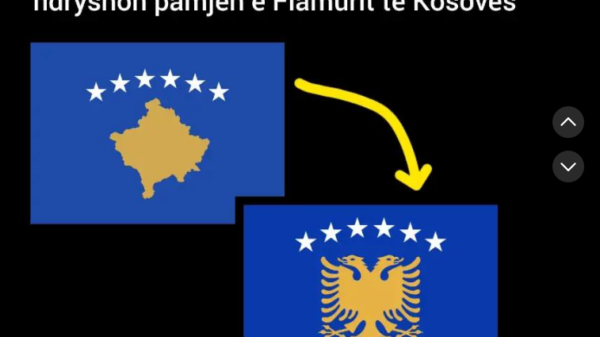
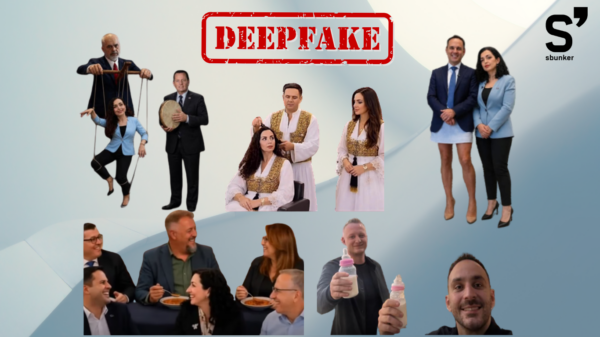
Political tensions, protest movements, institutional distrust, and debates over democratic governance are also likely to remain fertile ground for manipulative narratives throughout the region. AI-generated content and synthetic media continue to appear more frequently in political communication and online disinformation campaigns, especially around elections, protests, and identity-related issues. Kosovo’s extraordinary election campaign is particularly vulnerable to such manipulation, including the spread of AI-generated videos, altered imagery, and emotionally charged political messaging.
June Pride-related events and campaigns across parts of the region, including Prishtina Pride Week (1–5 June) and Skopje Pride scheduled for 20–21 June, may also generate renewed online polarization and manipulative narratives targeting LGBTI communities, gender equality initiatives, and civil society actors in already polarized political environments.
The region also continues to face broader structural vulnerabilities related to democratic governance, media freedom, civic space, and platform regulation, creating conditions in which emotionally charged and identity-based narratives can spread rapidly online.
 Albania: EU accession narratives and governance skepticism
Albania’s information environment is likely to remain shaped by competing narratives surrounding EU integration, governance reforms, and democratic credibility. Renewed positive signals from Brussels may intensify polarization between narratives portraying Albania as a regional success story and those claiming reforms remain superficial, externally driven, or disconnected from persistent corruption and governance concerns.
Manipulative narratives may seek to portray accession-related reforms as surrender of sovereignty or evidence of growing foreign influence over domestic institutions. Opposition and anti-establishment actors may also amplify claims that democratic standards are selectively applied or that corruption and clientelism remain fundamentally unresolved despite EU praise.
The controversy surrounding the proposed Kushner-linked luxury resort project on Albania’s southern coast may also become a focal point for manipulative narratives. Ongoing protests and political disputes around the project have already generated claims involving corruption, foreign influence, elite capture, and environmental destruction. Three disinformation risks are likely to shape the information environment around the Zvërnec protests in the coming weeks. First, the coexistence of two distinct protest currents — the civic-environmental movement and the longer-running opposition campaign led by the Democratic Party — creates conditions in which both the government and opposition actors may seek to conflate them for political gain, either dismissing environmental protesters as partisan proxies or absorbing a grassroots movement into an established political agenda, thereby polarising public support and eroding the movement’s cross-partisan credibility. Second, the government’s invocation of a “hybrid war” as the driving force behind public opposition — as already articulated by Prime Minister Rama in public statements — risks becoming a blanket tool to pre-emptively delegitimise civic grievances. Third, the involvement of Greek-origin protesters may provide an opening for external actors, including Greek nationalist media and political figures, to reframe a broadly Albanian civic movement as a bilateral minority dispute or an externally instigated conflict, fragmenting solidarity and displacing the core issues of environmental protection and rule of law.
Digital governance, online regulation, and civic-space issues are also likely to remain sensitive topics, particularly amid broader regional concerns over democratic resilience and platform accountability.
 Bosnia and Herzegovina: High Representative uncertainty, institutional fragility
Bosnia and Herzegovina is likely to remain vulnerable to destabilizing narratives surrounding the future of the Office of the High Representative (OHR), institutional fragility, and sovereignty disputes. Growing uncertainty surrounding the eventual departure of High Representative Christian Schmidt may further intensify political polarization ahead of the October elections.
Ongoing speculation over the eventual Schmidt replacement and renewed Republika Srpska demands for closure of the OHR may intensify polarization around Dayton governance arrangements and the legitimacy of international oversight.
Manipulative narratives are likely to frame the OHR either as a necessary guarantor of stability or as a foreign-imposed “protectorate” undermining sovereignty and democratic self-governance. Secessionist rhetoric and claims that Bosnia and Herzegovina is institutionally unsustainable may continue circulating in polarized political and media environments, in particular due to approaching anniversary of Srebrenica genocide in early July.
Debates over election integrity and institutional reform may also intensify ahead of preparations for the October general elections. Discussions surrounding biometric voting technologies and electoral oversight may become vulnerable to disinformation portraying reforms either as mechanisms for election manipulation or as attempts to prevent fraud and foreign interference.
 Kosovo: Election legitimacy, AI-generated manipulation, and security tensions
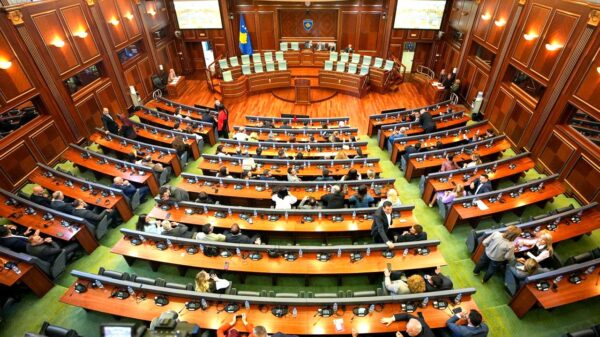
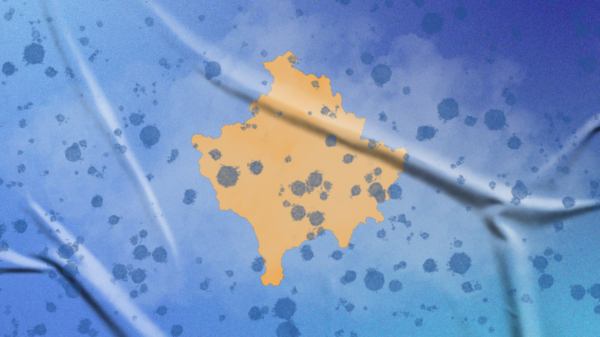
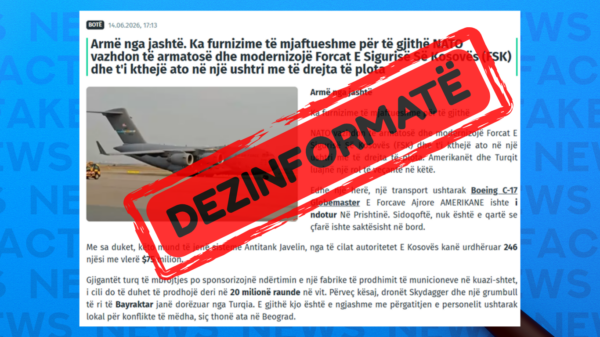
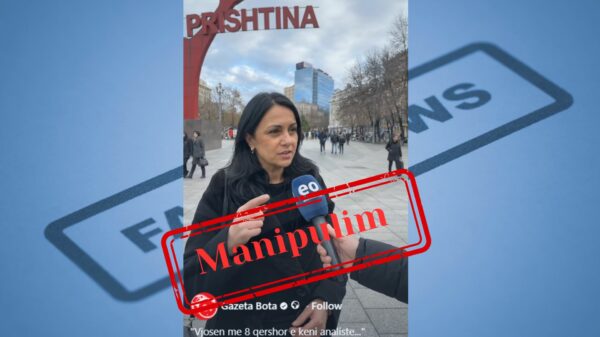
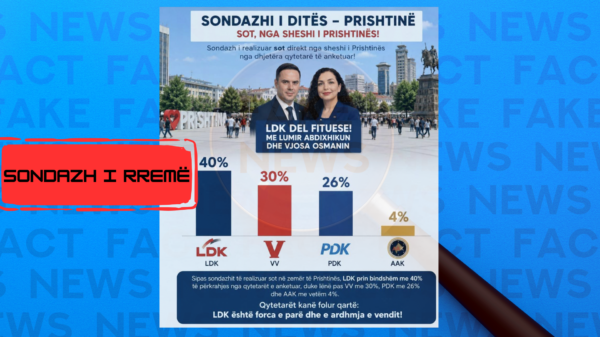
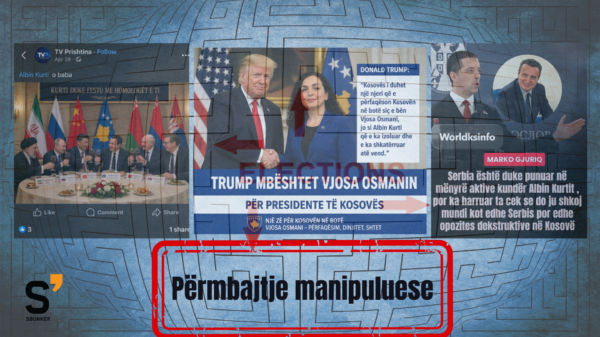
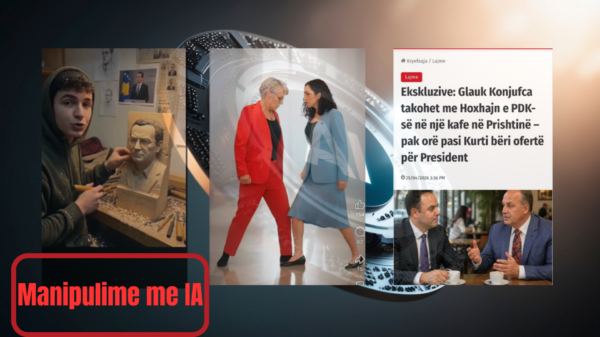
Kosovo’s extraordinary elections on 7 June are expected to intensify risks related to AI-generated disinformation, manipulated political content, and election-legitimacy narratives. Fact-checkers have already documented circulation of AI-generated videos and altered political imagery, while ongoing polarization, political uncertainty and sensitive issues related to the north of Kosovo, may contribute to heightened public debate and increased polarization during the campaign period.
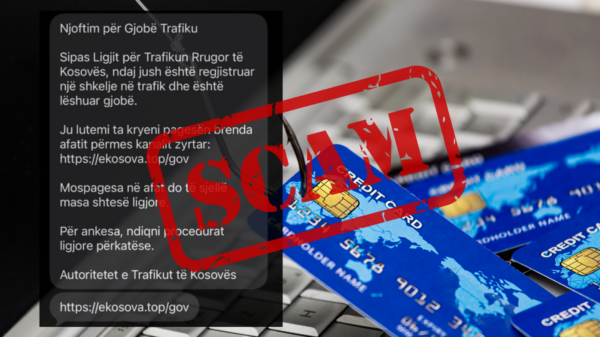
Recent cases documented by fact-checkers and civil society organizations already indicate increased circulation of AI-generated and manipulated political content targeting political figures and parties. Deepfakes, altered videos, impersonation content, and emotionally manipulative political messaging are likely to become more prominent during the final phase of the election campaign.
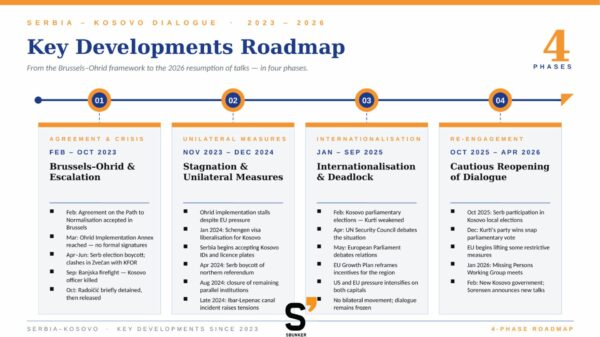
The political deadlock following the failure to elect a president and the dissolution of parliament may create opportunities for foreign malign actors to promote narratives portraying Kosovo as institutionally unstable or incapable of effective democratic governance. Such actors may seek to exploit political uncertainty by amplifying distrust in public institutions, questioning the legitimacy of electoral process or spreading misleading claims designed to deepen societal divisions and undermine public confidence in democratic decision-making. Ethnic and security-related narratives are also likely to intensify, including those linked to political competition among Kosovo Albanian parties, developments in north of Kosovo, Kosovo–Serbia relations and the role of international actors.
Competing geopolitical narratives involving the EU, the United States, Serbia, and broader regional stability issues may further shape public debate and contribute to polarization in the online information environment.
 Montenegro: Enlargement momentum, sovereignty narratives, and reform polarization
Montenegro is likely to remain at the center of regional debates surrounding EU enlargement credibility, sovereignty, and regional political tensions. As the host of the EU–Western Balkans Summit on 5 June, and amid controversy surrounding the decision to deny entry to dozens of Serbian nationals ahead of the event, competing narratives are likely to emerge around security, national sovereignty, relations with Serbia, and Montenegro’s position as the most advanced EU accession candidate, receiving French and EU support for its accession.
Following the encouraging statements by French President Emanuel Macron and preparations for the EU–Western Balkans Summit on 5 June, the country may increasingly be portrayed either as proof that enlargement remains achievable or as an example of excessive external influence over domestic politics. Montenegro may become a comparative reference point in broader regional debates over fairness, double standards, and the credibility of the enlargement process itself.
The EU–Western Balkans Summit in Tivat may also generate competing narratives surrounding the role of external actors and the balance between security measures and democratic freedoms. The decision by Montenegrin authorities to deny entry to dozens of Serbian nationals ahead of the summit has already triggered accusations of discrimination and political bias, while others have framed the measures as legitimate security precautions. These developments may fuel narratives portraying Montenegro either as defending its sovereignty and European orientation or as acting under external political pressure from Brussels and Western partners.
Manipulative narratives may seek to frame ongoing reforms, especially in the security and governance sectors, as either externally imposed conditions or evidence of “state capture” by political and foreign interests. Sovereignty-related rhetoric and claims about foreign influence over domestic institutions are likely to remain visible in polarized political debates.
Additional debates may emerge around Montenegro’s relations with the United States following the nomination of a new US ambassador, potentially generating familiar narratives about foreign influence, geopolitical alignment, and national sovereignty.
 North Macedonia: EU deadlock, identity polarization, and institutional distrust
North Macedonia is likely to face continued polarization surrounding the stalled EU accession process, constitutional amendments linked to the dispute with Bulgaria, and growing frustration over the country’s prolonged European integration path. Interethnic tensions, economic anxieties, and distrust toward political institutions may further amplify emotionally charged and identity-based narratives online, especially those related to ongoing ethnic Albanian students protests.
Statements by Prime Minister Hristijan Mickoski rejecting additional concessions regarding constitutional amendments, alongside opposition calls for a referendum on the country’s EU path, are likely to deepen public divisions over whether further compromises are acceptable in pursuit of EU membership. Manipulative narratives may increasingly portray the accession process either as unfairly blocked through bilateral pressure or as proof that domestic elites are exploiting identity issues for political gain.
Interethnic and language-rights tensions may also continue generating emotionally charged online narratives, particularly following protests and disputes related to Albanian-language rights and professional examinations. These issues remain highly vulnerable to nationalist framing, reciprocal accusations, and identity-based mobilization.
Economic governance debates are also becoming increasingly politicized. The recent adoption of a €260 million borrowing law has already triggered disputes over public debt, transparency, and fiscal responsibility. Manipulative narratives may exaggerate fears of economic collapse, corruption, foreign dependence, or institutional capture, further deepening distrust toward political institutions and democratic oversight mechanisms.
These developments unfold in an already vulnerable information environment characterized by institutional distrust, polarization, and documented foreign information manipulation risks linked to elections, identity politics, and geopolitical alignment.
 Serbia: Protest delegitimization, sovereignty rhetoric, and EU polarization
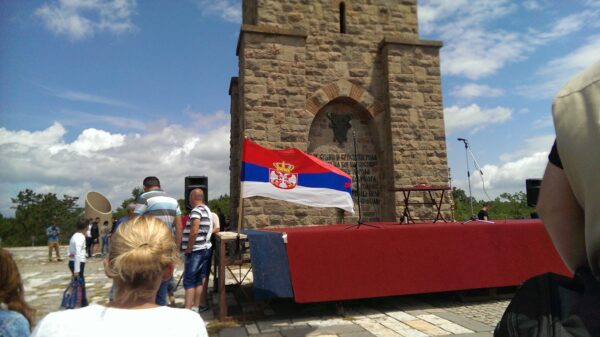
Political tensions surrounding anti-government protests, possible early elections, and Serbia’s relationship with the European Union are likely to dominate Serbia’s information environment during June. Such tensions will be enhanced with uncertainties regarding sale of Russian ownership (56.15%) in NIS – the major Serbian oil industry giant. Also, the quickly deteriorating relationship with certain parts of EU (European Parliament and EU Commissioner for Enlargement) could cause further deterioration of Serbia-EU relations and, already visible, increase in Serbian dependency on China (in both political and financial aspects).
Narratives portraying student and citizens protests as externally orchestrated “color revolution” attempts are expected to continue circulating across pro-government and nationalist media ecosystems, alongside efforts to delegitimize protest organizers, independent media, election observers, and civil society actors. Government officials, pro-government tabloids and aligned commentators have increasingly framed demonstrations as part of broader destabilization efforts allegedly supported by foreign actors (EU/NATO members), alongside efforts to delegitimize protest organizers, independent media, election observers, and civil society actors, while protest participants are often portrayed as extremists, foreign proxies, or threats to national stability (in best case mislead and deceived). Manipulative narratives may also seek to minimize protest turnout, exaggerate and conceive incidents of violence, and frame political competition itself as a danger to economic security, institutional order, and national sovereignty.
As anti-government demonstrations continue, competing narratives are also likely to emerge around demands for early elections and electoral conditions, with supporters presenting such demands as democratic accountability measures and opponents portraying them as attempts to destabilize institutions through extra-parliamentary pressure.
At the same time, Serbia’s EU accession trajectory is likely to remain a central source of political polarization. Renewed European scrutiny regarding democratic standards, rule of law, media freedom as well as journalist safety, and electoral conditions may generate intensified rhetoric about “double standards,” foreign pressure, and alleged anti-Serbian bias within the enlargement process.
Ongoing consultations between Serbian and various EU officials regarding democratic governance and accession credibility may further reinforce competing narratives portraying Brussels either as an essential democratic partner or as an actor seeking political influence over Serbia’s domestic affairs. Questions surrounding sovereignty, Kosovo policy, and Serbia’s geopolitical balancing between the EU, Russia, and China are likely to remain central themes in disinformation and political messaging.
Learn more
Recommended relevant publications related to information integrity in Western Balkans
- In Pursuit of Truth – documentary film about the flow of disinformation in the region by the Western Balkans Anti-Disinformation Hub
- Holding the Line: What Civil Society Needs to Stay Resilient Amid Democratic Backsliding – Mapping and Needs Diagnosis in Eastern Europe and Central Asia
- Enablers and Incentives of Election-Related Foreign Information Manipulation and Interference in North Macedonia
—
Disinfo Radar: Watch and Warn is a monthly publication, part of the alert system of data-driven early warning of disinformation in the Western Balkans. The Disinfo Radar provides advance warning about anticipated flashpoint events likely to fuel disinformation narratives based on the risk assessment analysis of results of continuous media monitoring and the previous experience with recurring disinformation campaigns.
The information provided by the Disinfo Radar is presented in concise, easy to read format and disseminated via the antidisinfo.net content hub, an email newsletter, and via the most popular social networks in the region.

This publication is an information service produced by Metamorphosis Foundation in cooperation with partner network including International and Security Affairs Centre (ISAC), Sbunker, Faktoje.al, and Center for Democracy and Human Rights (CEDEM).
This publication is free of charge and must not be sold. The views expressed in the publication are positions of the authors.
Author