



























When I received an invitation from Sbunker-i to write a series of articles on interethnic relations in Kosovo, with full freedom to choose the topics, I accepted it without much reflection, more out of professional solidarity than anything else.
But once I began to think seriously about what to write, that freedom quickly turned into a challenge. I found myself questioning what I could realistically contribute in a polarized, highly charged, and carefully curated information environment in Kosovo. Another article reinforcing already entrenched positions between Serbs and Albanians did not seem like a meaningful contribution. So, I took my time filtering ideas, refining them, and cutting them down, only to arrive at a simple conclusion: this series of articles would only be meaningful if it brought a new angle to the existing ethnic discourse.
I therefore decided to use this opportunity to challenge some of the stereotypes in Kosovo society about the intentions and actions of Kosovo Serbs.
The aim is to contextualize these positions and interests under a simple premise: that better understanding may also allow for greater recognition. In other words, to move beyond instinctive disapproval by unpacking the logic and motives behind certain claims.
It is admittedly an ambitious attempt, but worth pursuing nonetheless.
So, what do Kosovo Serbs want?
Although it may seem like a simple question at first glance, it has in fact been the subject of long-standing historical debate, deeply intertwined with political, cultural, and identity-related debates within Serbian society. It is a question that has never been fully answered, clearly defined, or collectively agreed upon.
Yet for an NGO such as the Center for Affirmative Social Actions (CASA), where I work and which aspires to represent the interests of the Serb community, this is not an abstract question, but a practical one. If we are to represent the interests of the Kosovo Serb community, they must first be defined.
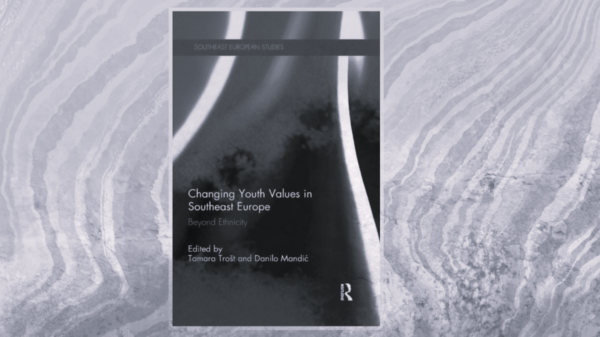
With that objective in mind, in 2023 we undertook an ambitious exercise to identify these interests, resulting in a study that has since become a cornerstone of our work: “Interests of Kosovo Serbs in the Process of Normalization of Relations Between Serbia and Kosovo.”
It is a comprehensive study that addresses issues of ethnic identity, political representation, the education system, autonomy, and many other questions that shape the lived realities of Kosovo Serbs.
For this article, however, I focus on one central finding: how ordinary people perceive the genuine interests of Serbs and Serbia in Kosovo. That insight ultimately speaks to the question at the heart of this piece: what do Kosovo Serbs want?
The study shows that, when given the opportunity and incentive to consider this issue beyond imposed political narratives and national agendas, safely and independently, Kosovo Serbs are able to articulate a coherent position. For Kosovo Serbs, the core interest is simple: to create the conditions to remain and live in Kosovo. So, what is interesting about this?
First, Kosovo Serbs do not necessarily tie their core interests to Kosovo’s status, but rather to their position within it. This is not just about mere survival, but about dignity, the protection of national identity, and the preservation of institutional, cultural, and economic ties with Serbia.
These are issues that do not affect Kosovo’s status in the international, but they do shape its social reality and particularly its democratic character.
This changes the focus of the debate. In practical terms, the question is no longer what these interests are, but how they can be achieved.
This leads to a second key point of the study: how these interests can be pursued in the current context, and more precisely, what the main actors in Pristina and Belgrade must do to make that possible.
Kosovo Serbs want implementation of existing laws, not new laws or privileges
The expectations from Belgrade are neither threatening to Kosovo Albanians nor radically different from the public interest. They point to policies that strengthen the human capacity of Kosovo Serbs, improve employment opportunities, provide financial assistance without corruption, and ensure political representation that serves their interests rather than those of the Serbian government. In other words, a genuine care and accountable leadership.
The fact that these demands are directed at Belgrade suggests that this is not currently the case.
On the other hand, expectations from Pristina are similarly practical and straightforward: the full implementation of rights already guaranteed under Kosovo law.
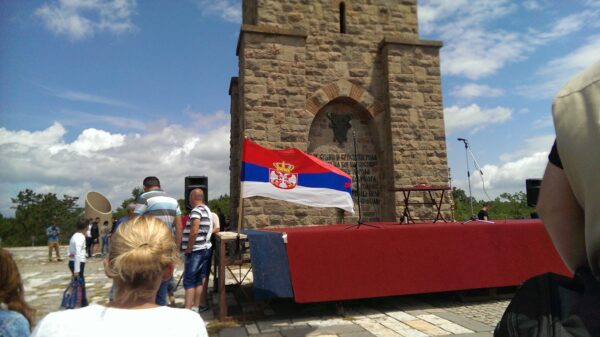
Whether it concerns a traffic ticket issued in Serbian, the right to display a flag at a wedding or on a holiday, or a system of self-governance agreed through an international arrangement, the expectation remains the same: if these rights formally exist, Kosovo Serbs should be able to exercise them fully.
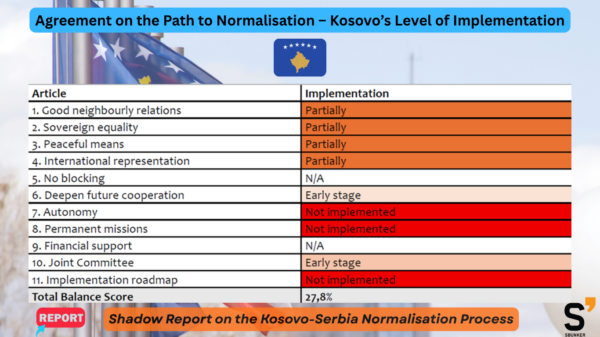
Kosovo Serbs recognize that their key interests, including protection mechanisms, autonomy, and ties with Serbia, are already embedded in the legal framework of Kosovo. What is missing is consistent implementation, not shaped by political agendas or legal ambiguity, but aligned with the original intent of the lawmakers themselves.
The Ahtisaari plan and its reflection in the Constitution of Kosovo were intended to establish a genuinely democratic and multiethnic society, but current practice increasingly diverges from that intent.
Selective implementation, arbitrary interpretation, and the use of legal ambiguity have, at times, turned the legal framework from a safeguard of multiethnicity into a tool of pressure on Kosovo Serbs.
This reflects a problematic use of the legal system that aspires the subordination of Kosovo Serbs to the will of the majority. The issue is that this “majority will” is shaped by ethnic and political tensions which further reinforces this dynamic.
As a result, Kosovo is becoming an increasingly hostile environment for Kosovo Serbs, outward migration continues, and it intensify unless this trajectory changes.
So, I will end this article by answering my primary question (What Kosovo Serbs want) and by raising two questions for refection, for both Kosovo Serbs and Albanians.
First, what Kosovo Serbs want is legitimate and does not necessarily go against the interests of Kosovo Albanians. But this can only be truly understood only if both sides step out of the trenches we have built and move beyond imposed narratives. We, as Serbs, need to ask ourselves a question: do our political choices truly reflect what we need?
On the other hand, Albanians must ask themselves if a monoethnic Kosovo (without Serbs) is truly in their interest? Do you want to be seen as a society incapable of sustaining multiethnicity?
Both questions need to be considered with clear, sober logic, not ethnic triumphalism or biased interpretations of fairness, because the answers will help shape the future of Kosovo, the region, and Europe.