

















Anticipated flashpoint events likely to fuel disinformation narratives in the Western Balkans during July 2026, identified during June 2026
Western Balkans Watch and Warn: Memory politics, institutional legitimacy and seasonal information manipulation
July 2026 is likely to be shaped by a convergence of political, historical and seasonal developments that create favorable conditions for information manipulation across the Western Balkans. As governments continue to navigate domestic political tensions, European integration and institutional reforms, public attention is also expected to focus on emotionally charged commemorations, the summer tourism season and increasing risks associated with extreme weather, particularly wildfires. Together, these developments provide multiple opportunities for domestic and foreign actors to exploit existing social divisions, reinforce distrust in democratic institutions and amplify identity-based narratives.
Questions surrounding democratic legitimacy are expected to remain prominent throughout the region. Continued scrutiny by European institutions regarding the rule of law, media freedom and democratic standards may reinforce competing narratives portraying EU conditionality either as an essential driver of reforms or as evidence of political pressure, double standards and external interference in domestic affairs. Similar patterns are likely to emerge across several Western Balkan countries, although shaped by distinct national political contexts.
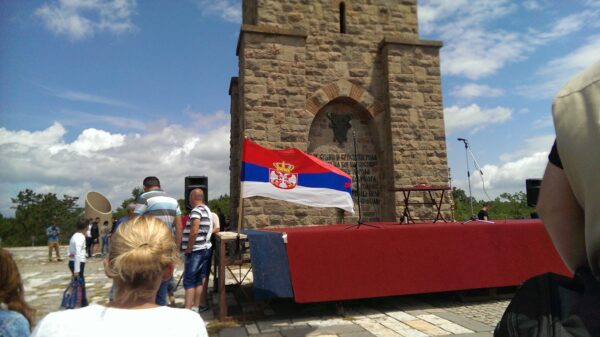
July also marks one of the most sensitive periods in the region’s calendar of collective memory. The commemoration of the Srebrenica genocide on 11 July is likely to once again generate competing narratives ranging from remembrance and accountability to genocide denial, historical revisionism and competing victimhood. As in previous years, these narratives are expected to transcend national borders, influencing political and media discourse well beyond Bosnia and Herzegovina. At the same time, July may serve as a period of narrative priming ahead of the anniversary of Operation Storm (Oluja) in early August, another event that regularly generates polarized historical interpretations across the region.
Alongside these political and historical developments, the summer months themselves create recurring opportunities for what may be described as seasonal information manipulation. Experience from previous years shows that wildfires, tourism, heatwaves and other seasonal events frequently become subjects of misleading reporting, exaggerated claims and politically motivated disinformation. Narratives portraying countries as unsafe tourist destinations, assigning political blame for natural disasters, spreading false emergency information or exploiting climate-related events for political purposes have become increasingly recurrent across the Western Balkans.
Artificial intelligence continues to lower the cost and increase the sophistication of online manipulation. AI-generated images, videos and synthetic political content are expected to remain present throughout the region, particularly in relation to elections, political crises and emotionally charged social debates. While many of these campaigns continue to target domestic audiences, they increasingly intersect with broader regional narratives, highlighting the need for coordinated monitoring and cross-border analysis of emerging information threats.
 Albania: EU accession momentum, environmental governance and institutional trust
Albania is likely to remain one of the principal examples cited in regional discussions on EU enlargement, with competing narratives surrounding both the country’s progress toward membership and the credibility of the accession process itself. Positive signals from the European Union regarding Albania’s negotiating process are likely to reinforce narratives portraying the country as evidence that enlargement remains achievable for committed reformers. At the same time, critics may increasingly argue that Brussels is overlooking persistent governance shortcomings, corruption and democratic deficits in favour of geopolitical considerations, fuelling claims of selective standards and unequal treatment among candidate countries.
Public debate is also expected to remain focused on the controversial luxury tourism development linked to Jared Kushner’s investment project on Sazan Island and the surrounding coastal area. Environmental organisations, civil society groups and opposition actors have continued to challenge the transparency of the project and its potential environmental impact, while supporters frame it as a major investment opportunity. These debates are likely to provide fertile ground for manipulative narratives portraying the project either as evidence of state capture, foreign exploitation and environmental destruction, or, conversely, as another example of politically motivated obstruction of economic development. Nationalist, anti-Western and, in some online spaces, anti-Semite narratives may also seek to exploit the controversy to reinforce broader geopolitical messages rather than focusing on the merits of the project itself.
Broader debates surrounding environmental governance, public participation and institutional accountability are likely to remain vulnerable to disinformation during the summer months. As tourism reaches its seasonal peak, isolated incidents relating to environmental protection, infrastructure or public services may increasingly be amplified beyond their actual significance, contributing to wider narratives questioning the effectiveness of public institutions and democratic governance. Similar patterns have accompanied previous tourist seasons in the Western Balkans, where local issues were frequently reframed into broader political or geopolitical narratives.
 Bosnia and Herzegovina: Memory politics, institutional legitimacy and competing visions of the post-Dayton order
Bosnia and Herzegovina is expected to remain at the centre of regional information risks during July, as the commemoration of the Srebrenica genocide once again becomes one of the most emotionally and politically sensitive events in the Western Balkans. Previous years have shown that the anniversary regularly generates coordinated waves of historical revisionism, genocide denial, competing victimhood narratives and attempts to delegitimize international judicial findings. Similar narratives are likely to circulate again across political actors, partisan media ecosystems and social media platforms, extending well beyond Bosnia and Herzegovina into neighboring countries and the wider region.
Alongside outright genocide denial, more subtle forms of historical revisionism may also become increasingly visible. These may include attempts to relativize responsibility through false equivalence, selectively reinterpret historical events, question the legitimacy of international courts, or portray remembrance initiatives as politically motivated attacks against particular ethnic communities. Such narratives contribute to long-term societal polarization by undermining trust in established historical facts and weakening prospects for reconciliation.
Institutional legitimacy is expected to remain another major point of contestation. Continued uncertainty surrounding the future of the Office of the High Representative, combined with ongoing political disputes over the Dayton constitutional framework, is likely to reinforce competing narratives about sovereignty, international oversight and the future governance of Bosnia and Herzegovina. While some political actors continue to portray the High Representative as an indispensable guarantor of constitutional order and regional stability, others increasingly frame the institution as an outdated mechanism of external control that limits democratic self-government.
Recent debates linked to the European Parliament’s assessment of Bosnia and Herzegovina’s democratic reforms may further contribute to these competing interpretations. Criticism related to the rule of law, democratic institutions and constitutional reforms is likely to generate opposing narratives presenting European scrutiny either as legitimate support for democratic transformation or as another example of selective political pressure and external interference. As in previous years, these discussions may reinforce broader regional narratives questioning the credibility of the EU enlargement process and the consistency of European conditionality.
 Kosovo: Institutional continuity, political uncertainty and information integrity
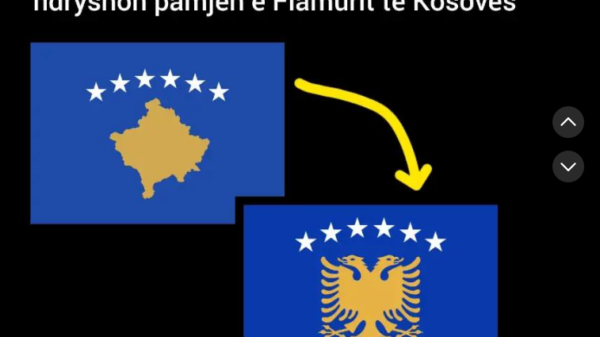
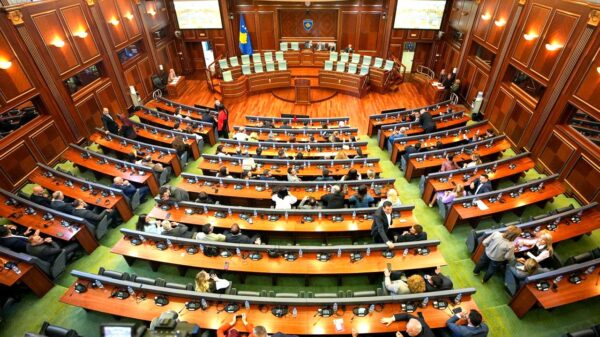
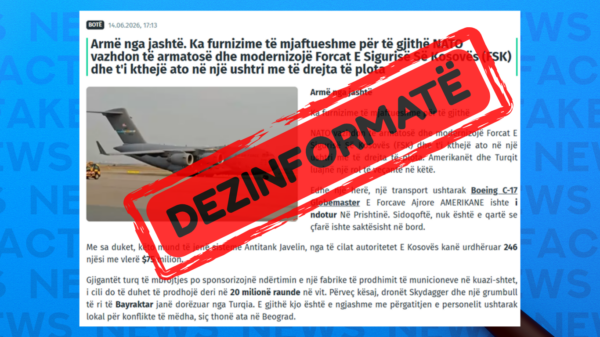
Kosovo is likely to remain vulnerable to manipulative narratives surrounding institutional legitimacy as political actors continue efforts to establish a stable governing majority following the parliamentary elections. Continued uncertainty surrounding coalition negotiations, parliamentary procedures and government formation may provide fertile ground for narratives portraying democratic institutions as ineffective, dysfunctional or incapable of delivering political stability. Competing political actors are likely to frame institutional developments in fundamentally different ways, reinforcing existing political polarization.
The prolonged political uncertainty also creates opportunities for foreign and domestic actors to exploit public frustration through narratives questioning the legitimacy of democratic institutions and constitutional mechanisms. Claims suggesting institutional paralysis, democratic failure or permanent political crisis may become increasingly visible if negotiations remain unresolved during July. Similar narratives may also seek to undermine confidence in Kosovo’s European integration process and its broader democratic trajectory.
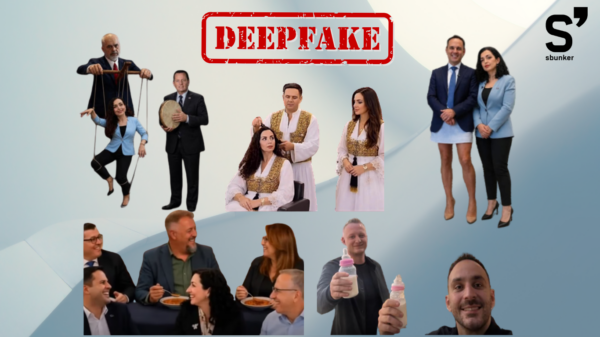
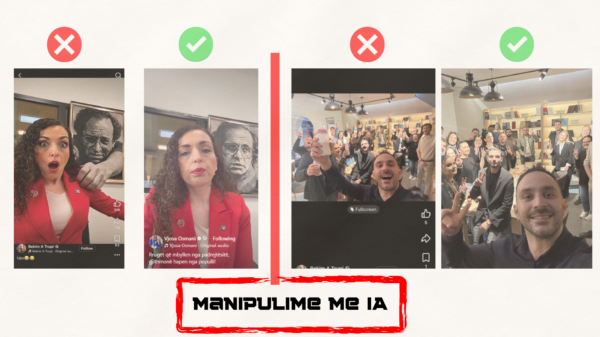
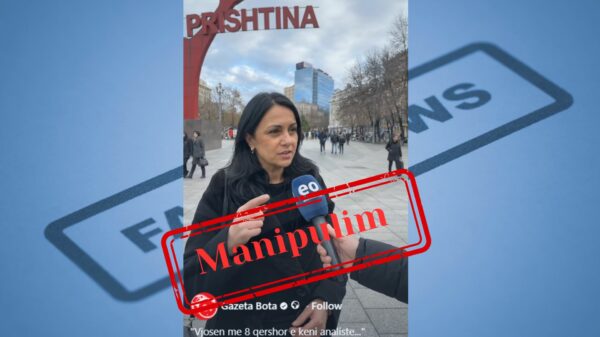
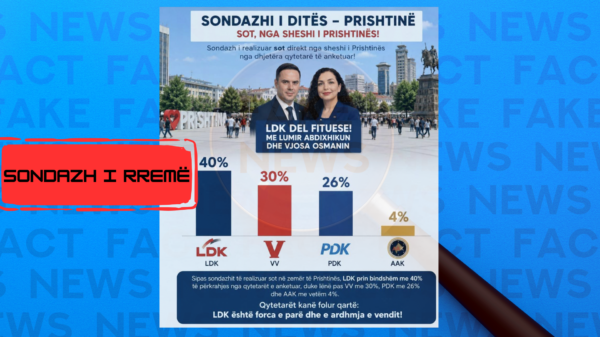
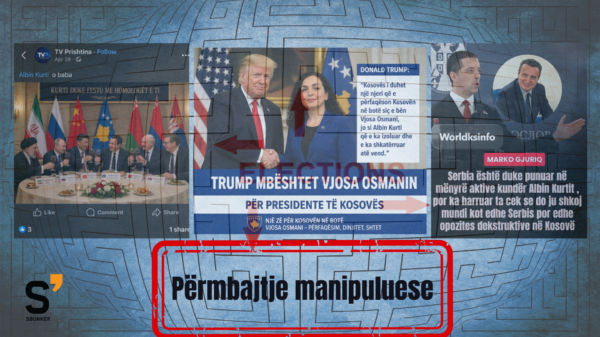
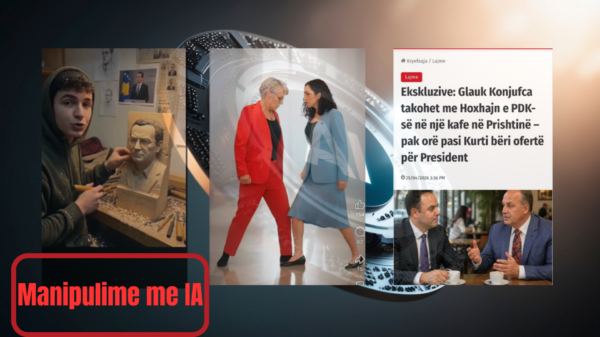
Artificial intelligence and digitally manipulated content continue to represent an emerging challenge for Kosovo’s information environment. Although the parliamentary elections have concluded, recent experience demonstrated how AI-generated images, altered videos and fabricated political statements can rapidly circulate online, particularly during periods of heightened political uncertainty. Such techniques are likely to remain available for future political developments and may increasingly be employed to amplify existing narratives concerning ethnic relations, institutional trust and regional security.
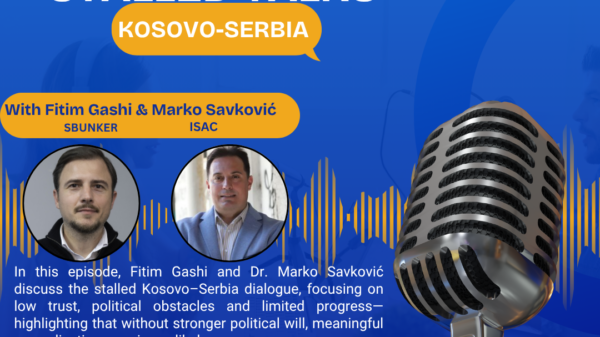
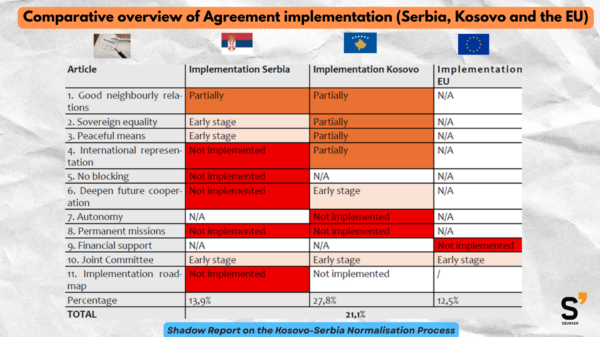
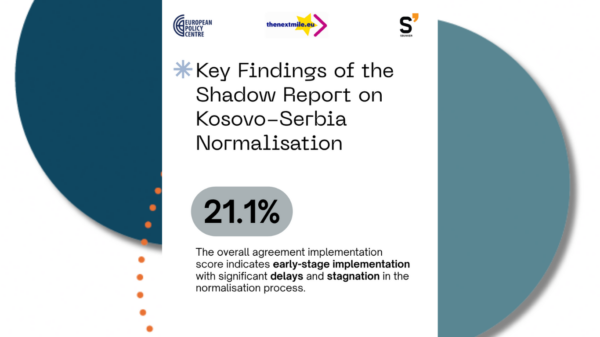
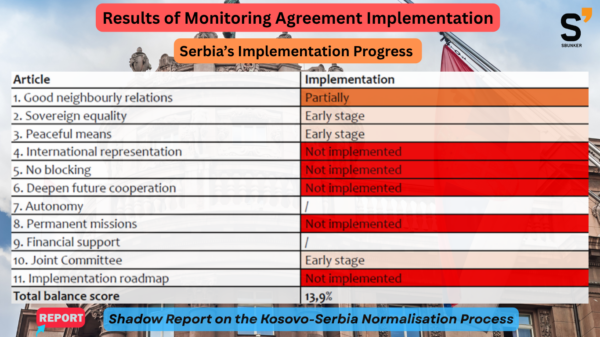
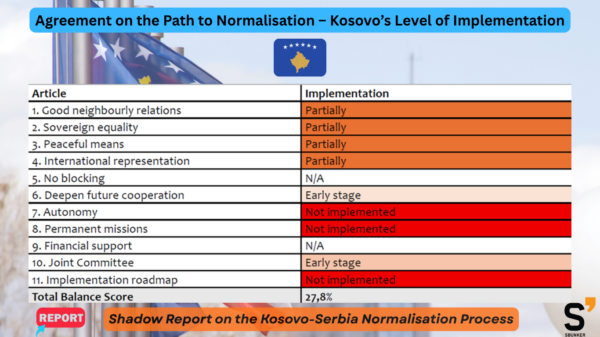
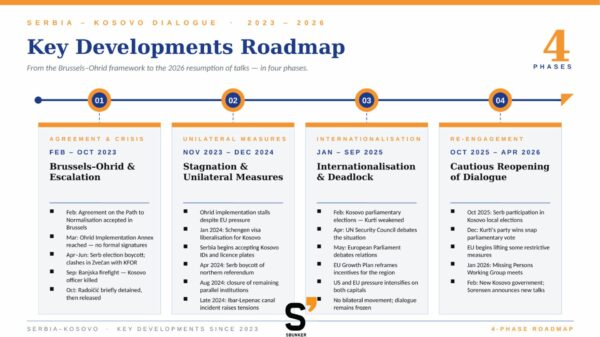
Relations between Kosovo and Serbia are also expected to remain a recurring source of information manipulation. Political developments in either country may rapidly generate cross-border narratives concerning sovereignty, international mediation, security and the role of external actors, reinforcing broader geopolitical messaging throughout the Western Balkans.
 Montenegro: Tourism disinformation, media freedom and contested reform legitimacy
Montenegro is likely to remain one of the focal points of regional discussions on European integration following the positive political momentum generated by the EU–Western Balkans Summit and continued signals that it remains the most advanced accession candidate. As the country moves closer to the final stages of negotiations, competing narratives are expected to portray Montenegro either as evidence that EU enlargement remains credible or as an example of external political influence shaping domestic reforms.
With the peak summer tourist season now underway, Montenegro is also likely to experience a familiar pattern of seasonal information manipulation targeting its tourism sector. Previous years have demonstrated that isolated incidents involving prices, border crossings, public services, environmental conditions or security are frequently exaggerated or misrepresented to discourage visitors, particularly from neighboring Serbia. Recent misleading reporting surrounding parking charges at Tivat Airport illustrates how narrowly applicable local decisions can quickly be transformed into sensational claims portraying Montenegro as excessively expensive or hostile towards tourists. Similar narratives may continue throughout July, contributing to broader political messaging concerning governance, bilateral relations and economic decline.
The ongoing exchange of entry bans between Belgrade and Podgorica is likely to keep producing narratives that distort the facts. Each new ban will probably be framed as “both sides doing the same thing,” making it look as if Serbia and Montenegro are equally at fault and equally wronged. This framing obscures an important difference between the cases. Montenegro’s ban concerned a Serbian tabloid editor after public statements described as hate speech (a criminal offence in Montenegro). Serbia’s response, however, has affected Montenegrin media figures including reputable TV journalists and investigative journalists reporting on corruption. Presenting these as equivalent serves one purpose — to make pressure on media freedom look mutual and therefore less serious, instead of judging each case on what actually happened.
The agreement between government and opposition on constitutional changes and oversight is likely to face two competing narratives. One will claim it’s a backroom deal between political elites rather than a real reform. The other will claim the whole process is being dictated from outside, by the EU or other foreign actors. These two stories point in opposite directions, but they aim at the same result: making the constitutional amendments process including eventual referendum look illegitimate before it even happens, so that whatever the outcome, it can be dismissed as not credible.
As preparations continue for further accession reforms, questions surrounding institutional independence, media freedom and democratic governance are also likely to remain present in public debate. Competing political actors may increasingly frame reform measures either as evidence of democratic consolidation or as externally imposed conditions that undermine national sovereignty. These narratives are expected to intersect with broader regional debates concerning the credibility of EU enlargement and the balance between domestic political ownership and European conditionality.
 North Macedonia: EU accession deadlock, institutional trust and identity politics
North Macedonia is expected to remain strongly influenced by debates surrounding the country’s stalled EU accession process and the continuing dispute with Bulgaria. As discussions over constitutional amendments, bilateral conditions and the future of enlargement continue, competing narratives are likely to reinforce public frustration regarding the prolonged accession process. Supporters of further compromise may increasingly emphasize the strategic importance of EU membership, while opposing voices are likely to portray additional concessions as unacceptable threats to national identity, language and historical memory.
The publication of the European Parliament’s annual assessment and broader discussions regarding democratic standards may further intensify debates over sovereignty and institutional legitimacy. Political actors may selectively interpret European criticism either as constructive support for reforms or as evidence of unfair political pressure, double standards and external interference in domestic affairs. Similar narratives have become increasingly common throughout the Western Balkans as enlargement remains closely linked to broader geopolitical developments.
Domestic political competition is also expected to continue reinforcing identity-centered narratives. Interethnic relations, language issues and politically sensitive historical questions remain particularly vulnerable to manipulation through emotionally charged online content. At the same time, debates concerning public finances, governance and institutional accountability may contribute to broader narratives questioning the effectiveness of democratic institutions. Together, these issues continue to provide fertile ground for both domestic political messaging and foreign information manipulation seeking to deepen existing social divisions.
 Serbia: Political uncertainty, democratic scrutiny and competing narratives of legitimacy
Serbia is likely to experience one of the region’s most dynamic information environments during July as continuing anti-government protests coincide with growing political uncertainty following President Aleksandar Vučić’s announcement that he intends to step down before the end of his mandate. Although no official constitutional roadmap or electoral timetable has yet been presented, the absence of clear institutional guidance is likely to generate increasing public speculation regarding possible presidential and parliamentary elections, the future composition of the government and Vučić’s own political role. Until greater clarity emerges, competing political actors are expected to fill this uncertainty with conflicting interpretations, rumors and strategic messaging.
Narratives portraying anti-government protests as externally orchestrated “colour revolution” attempts are likely to remain prominent within pro-government media ecosystems. Independent media, civil society organizations, election observers and protest organizers may continue to face coordinated efforts aimed at questioning their legitimacy, portraying civic mobilization as a threat to political stability, national sovereignty or economic security. At the same time, opposition actors are likely to intensify narratives emphasizing democratic accountability, institutional capture and the need for political change, further contributing to an increasingly polarized information environment.
European institutions are also expected to remain an important reference point within Serbia’s domestic political debate. Continued international attention to democratic standards, media freedom, electoral conditions and the rule of law may generate competing narratives portraying European criticism either as legitimate democratic oversight or as politically motivated interference directed against Serbian sovereignty. A recurring pattern in pro-government Serbian media is to personalize such criticism by targeting named European political figures, such as Tonino Picula or Marta Kos; when no individual target is available, the framing often shifts toward broader “hostile” entities, institutions or states portrayed as acting against Serbia. Similar themes have become increasingly visible across the Western Balkans, although in Serbia they are likely to intersect particularly strongly with debates over Kosovo, relations with Russia and China, and the country’s broader geopolitical orientation.
The July information environment is also expected to increasingly intersect with historical memory. As the Srebrenica genocide anniversary approaches, historical revisionism, competing victimhood narratives and debates over responsibility are likely to receive renewed attention across Serbian political and media spaces. These narratives may continue into early August as public discourse gradually shifts toward commemorations surrounding Operation Storm (Oluja), illustrating once again how historical anniversaries remain among the most predictable drivers of regional information manipulation.
Learn more
Recommended relevant publications related to information integrity in Western Balkans
- Bringing the Western Balkans into the EU Democracy Shield and the EDMO Ecosystem – policy paper by Anti-Disinformation Network for the Balkans
- Geopolitics of Disinformation Threats in the Western Balkans
- Everyday Extremism in Serbia: Between Democratic Protest and Political Polarization
- Mapping the Hate Speech in Montenegro
—
Disinfo Radar: Watch and Warn is a monthly publication, part of the alert system of data-driven early warning of disinformation in the Western Balkans. The Disinfo Radar provides advance warning about anticipated flashpoint events likely to fuel disinformation narratives based on the risk assessment analysis of results of continuous media monitoring and the previous experience with recurring disinformation campaigns.
The information provided by the Disinfo Radar is presented in concise, easy to read format and disseminated via the antidisinfo.net content hub, an email newsletter, and via the most popular social networks in the region.

This publication is an information service produced by Metamorphosis Foundation in cooperation with partner network including International and Security Affairs Centre (ISAC), Sbunker, Faktoje.al, and Center for Democracy and Human Rights (CEDEM).
This publication is free of charge and must not be sold. The views expressed in the publication are positions of the authors.
Author