






















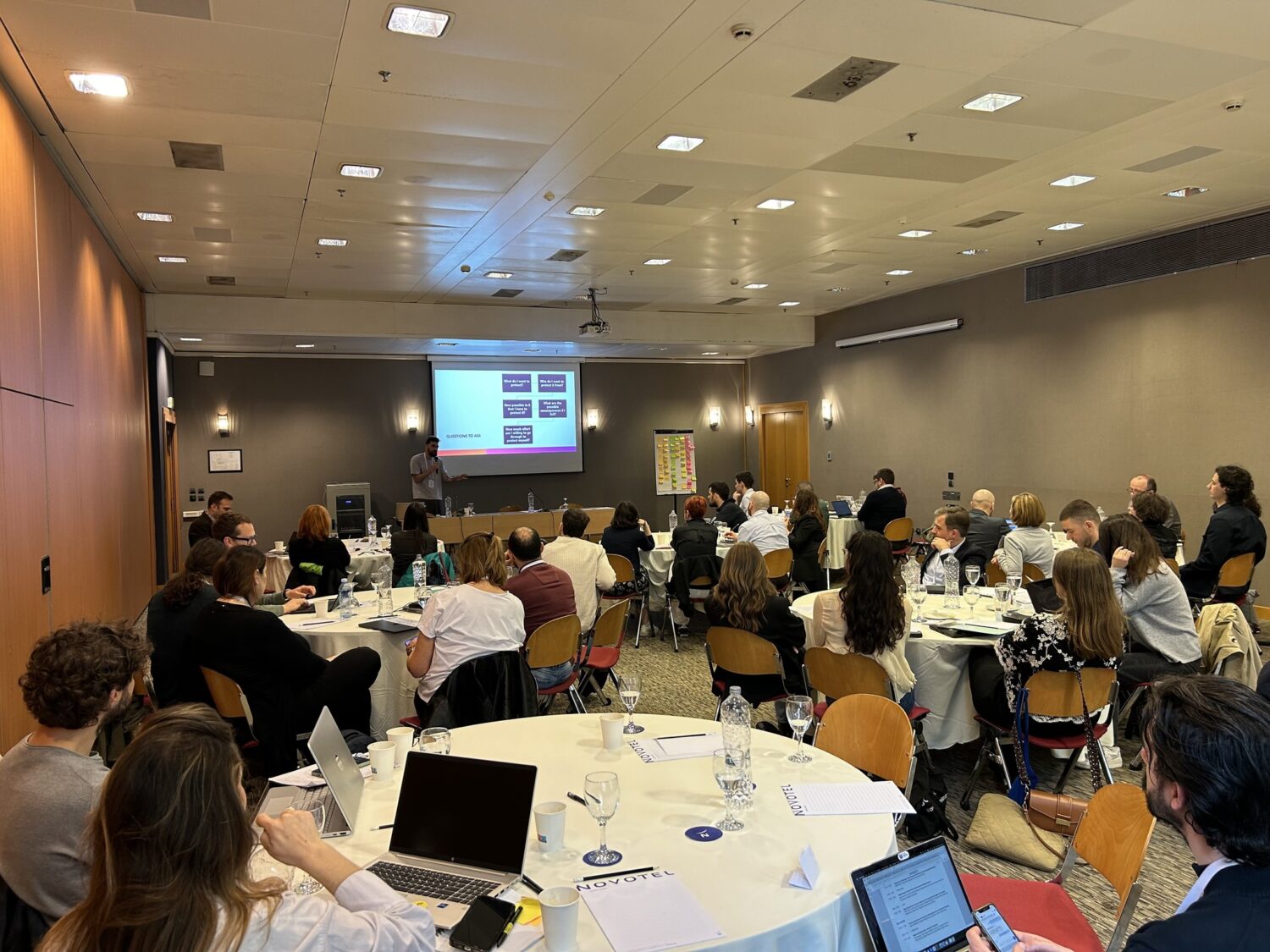
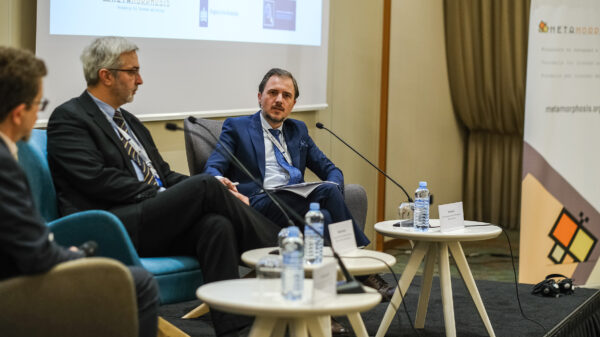


A roundtable discussion titled “The Kosovo–Serbia Normalisation Process: Between Implementation and Crisis Management” was held on Thursday in Brussels, organized by Carnegie Europe, Sbunker and the Centre for European Policy (CEP).
The event brought together officials from the European External Action Service (EEAS) directly involved in the Kosovo–Serbia dialogue, representatives of the European Commission, NATO, diplomats, as well as experts from civil society organizations and research institutes from across the region and Europe.
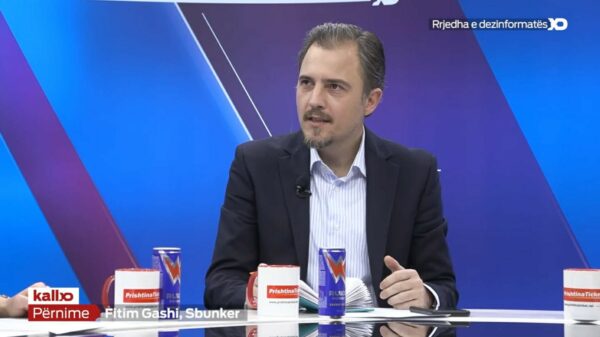
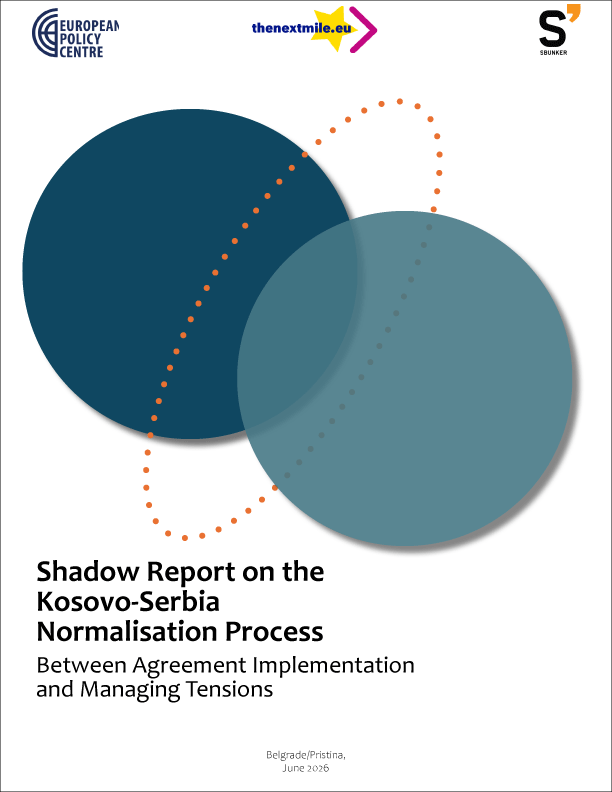
The central focus of the discussion was the presentation of the joint report, “Shadow Report on the Kosovo-Serbia Normalisation Process: Between Agreement Implementation and Managing Tensions,” authored by Fitim Gashi (Sbunker) and Miloš Pavković (CEP).
The report provides a joint assessment of the implementation of the Brussels Agreement and the Ohrid Annex through a methodology applied for the first time, known as the “Normalisation Index.”
The findings show that, three years after the Brussels Agreement, the overall level of implementation remains at 21.1 percent.
The setbacks in the process are not only related to the lack of political will from the parties, but also to structural challenges in the architecture of the dialogue itself.
Participants in the roundtable noted that the lack of political commitment, ambiguities in the formulation of agreements, the absence of effective implementation mechanisms, and recurring crises on the ground have often transformed the dialogue from a process of normalization into a process of crisis management.
It was emphasized that future progress will depend not only on the commitment of Kosovo and Serbia, but also on the ability of international mediators to ensure greater implementation of existing agreements.
Participants assessed that the formation of new institutions in Kosovo and ongoing efforts to reactivate the process create opportunities for the resumption of substantive discussions. However, it was stressed that success should not be measured by the conclusion of new agreements, but by the concrete implementation of those already in place.
The report on the dialogue was published within the framework of the project “Supporting the EU Enlargement Through the Normalisation Process Between Serbia and Kosovo: Civil Society as a Driver of Progress,” supported by the Open Society Institute – Sofia Foundation (OSIS) through the Think Tanks for the Future of EU Enlargement Program (TFEP).
The full report can be accessed here: Shadow Report on the Kosovo-Serbia Normalisation Process