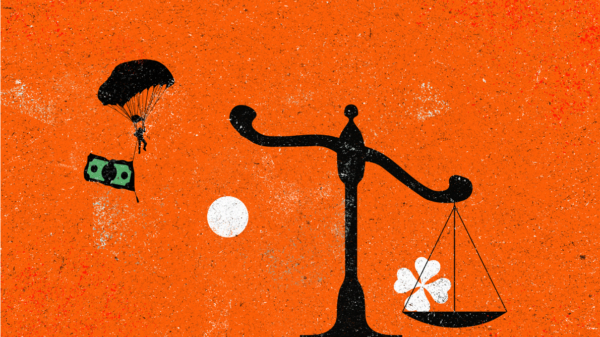














Imagine you are playing a complex, high-stakes board game with hundreds of pages of rules, stretching well over decades. After a while, you become familiar with the game and its rules, constantly adjusting your strategy to win the game. Then, out of the blue, in the middle of the game, new rules are introduced, new players enter the board, and you are told to step aside and become a spectator.
How would you feel?
You would probably question the integrity of the entire game. You would look at the board with frustration and wonder why you spent ten or twenty years twisting yourself into knots to follow rules that the creators now treat as flexible.
That sense of frustration is quietly reshaping the enlargement debate within the EU today. However, the EU keeps pretending to play the old board game while the member states simultaneously propose adjusting the rules.
While the Commission maintains its “28-by-28” narrative, suggesting the EU could expand from 27 to 28 members and offering Montenegro a potential accession horizon by 2028, two recently published documents—a non-paper from five EU member states and a letter from German Chancellor Friedrich Merz—point to a very different reality.
This begs the question of whether the EU enlargement process is losing its original purpose as a path to full membership, as EU member states increasingly try to replace it with new forms of partial integration without offering a clear and credible path to EU membership.
The Non-Paper Proposes Gradual Integration into the EU Single Market
A non-paper circulated by five EU member states (Austria, Czechia, Italy, Slovakia, and Slovenia) proposes a merit-based and gradual integration into the single market for all EU candidate countries, without preferential treatment for Ukraine.
The non-paper proposes gradual sectoral integration through step-by-step access to the energy market, digital single market, transport networks, and youth mobility in exchange for reform benchmarks.
On a technical level, these are meaningful gains: greater market access, lower energy costs, and improved mobility would bring tangible benefits to businesses and young people today.
However, the non-paper does not address the key question of whether this process would lead to full EU membership. Sectoral integration only works if it serves as a pathway to accession rather than a substitute for it.
In practice, this ambiguity serves EU member states well. Sectoral integration allows them to signal engagement without confronting difficult political choices. Full membership entails admitting new members into EU institutions, sharing voting power, and absorbing significant financial and political costs. Sectoral integration avoids these commitments, offering the appearance of action without real obligation.
In the Western Balkans, interim steps without clear accession timelines have often become endpoints. Without deadlines, gradual or partial integration risks turning into a permanent substitute for enlargement, effectively formalizing the status quo.
Chancellor Merz Proposes “Associated Membership” for Ukraine and “Observer Status” for the Western Balkans and Moldova
The second letter, from German Chancellor Friedrich Merz, outlines his own vision of enlargement, proposing “associated membership” for Ukraine and observer status for the Western Balkan countries and Moldova.
This proposal is primarily driven by geopolitical considerations and goes against the merit-based approach promoted by the EU.
Berlin now acknowledges what has long been implied in Brussels: full EU membership for Ukraine is not realistic. The scale of integration, including a vast agricultural sector, thousands of legal adjustments, and postwar reconstruction, makes accession unlikely in the near term.
By offering “associated membership” for Ukraine, this signals alignment with the West and reassures Kyiv, while avoiding the EU’s own institutional constraints. It offers visibility and influence, but without voting power or formal decision-making authority. Ukraine would get a seat at EU institutions, but no political weight behind it. President Zelensky himself has made clear that this is not enough, in a letter to EU leaders, he called the proposal unfair, arguing that it would leave Ukraine present but voiceless.
On the other hand, the letter offers little to the Western Balkans and Moldova, which have waited for years. Instead, they would be placed in an “observer”, category, a new tier between the hallway and the door, suspended in diplomatic purgatory.
Rather than refining enlargement, this reorders the EU’s neighbourhood into a permanent periphery with no clear path to membership. For countries that have spent over a decade pursuing reforms, bearing significant domestic political costs, and sustaining a pro-European course despite shifting public opinion, the message is stark: the rules apply until geopolitics says otherwise.
From EU Enlargement Policy to EU Problem Management
At first glance, both proposals appear innovative, but in reality, they reflect an EU that no longer knows how to handle the enlargement process. Rather than confronting its political failure directly, EU member states are searching for new ways to disguise the lack of genuine enlargement by reinventing new waiting rooms.
EU enlargement was long praised as one of the EU’s most successful foreign policy tools. Today, however, it is no longer forward-looking or transformative but increasingly resembles an effort to manage a problem rather than pursue a policy.
These proposals do not suggest that the EU is preparing for enlargement. They do not read like the work of a political bloc that has spent three decades defining enlargement as a transformative commitment.
This will seriously weaken the credibility of EU enlargement, and no combination of sectoral packages, observer seats, or associated memberships can fix it. The problem is no longer technical but political.
When EU member states such as Germany advance such ideas, it signals something important: they no longer believe the current framework can deliver, and they are no longer willing to reform it.
While it is positive that Germany and some other EU member states are back in the enlargement debate, the concern is that they are not offering an ambitious framework for Ukraine, Moldova, and especially the Western Balkan countries, which have been waiting for decades and deserve more than a new label for the same closed door.