







When someone asks me to describe my home country, I instinctively start by talking about the Balkans. The Balkan Peninsula is a unique region of Europe with a complex identity, shaped by its geography, culture, and history.
The beginning of the Balkan civilizations is the story of the origin of Europe. One of the first sedentary cultures on the continent, the Vinca culture, populated the banks of the Danube river between 6500 and 4500 BC.
Today, European civilization claims its roots in the Greco-Roman traditions of the Ancient Hellenic cultures that inhabited the southern parts of the Balkans. Hellenic traditions set the ground for European literacy, through poetry, drama, tragedy, philosophy, and history as a literary form. Even Europe’s first alphabet, the Greek alphabet, comes from the southern Balkans.
Beyond Hellenic influence, Roman rule in the Balkans, shaped by ancient Greek ideas, transformed social, political, and cultural life for centuries. The adoption of Roman lifestyles, and later Christianity, shaped the continent and beyond.
The great schism of Christianity in the 11th century divided the Balkans into the Catholics and the Orthodox. The fall of the Byzantine Empire paved the way for the rise of the Ottoman Empire, another major cultural center, which coined the term “Balkans,” derived from the Turkish word for “mountain.”
The Ottoman Empire’s conquest of parts of Europe, followed by nearly five centuries of rule in parts of the continent, introduced Islam to the region. This long presence is the main reason why the only native Muslim populations in Europe today are found in the Balkans.
However diverse the histories and traditions of the Balkans may be, they overlap in many ways. Many peoples in the region trace their roots to Hellenic, Illyrian or Slavic cultures, but it is important to remember that these cultures never existed in isolation. Instead, they have long mixed, interacted, and influenced one another culturally and geographically.
This cohabitation created numerous fascinating places such as Kosovo, Vojvodina, Transylvania, and Istra, each with a unique regional identity that both reflects and transcends the differences among its inhabitants. I was raised in Belgrade and spent most of my summers in Vojvodina, although my family comes from coastal Montenegro. For this reason, when describing my culture, I focus on my region rather than my country.
To some people, this might sound complicated, but it felt completely normal to me until I moved abroad. In the Balkans, it’s very common for families to be spread across several countries and hold different passports. Even within the same country, regional identities often feel stronger than the national one.
I struggle to explain this cultural flow and overlap to people who look at our region from the outside. But I also noticed that the Balkans occasionally get stuck in the imaginary borders of the identity that they designed for themselves, overlooking the richness of traditions within their own culture and the undeniable connections with their neighbors.
Personal interactions throughout the peninsula are marked by the hospitality and friendliness we take pride in, without the sense of culture shock. Yet regional and national rivalries, political tensions, and historical pain persist.
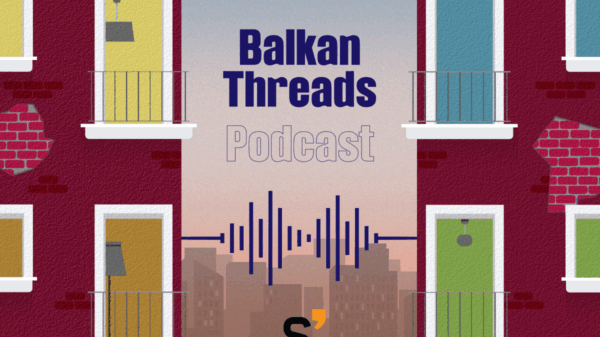
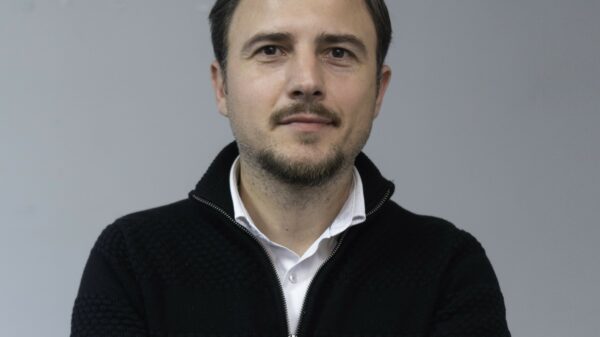
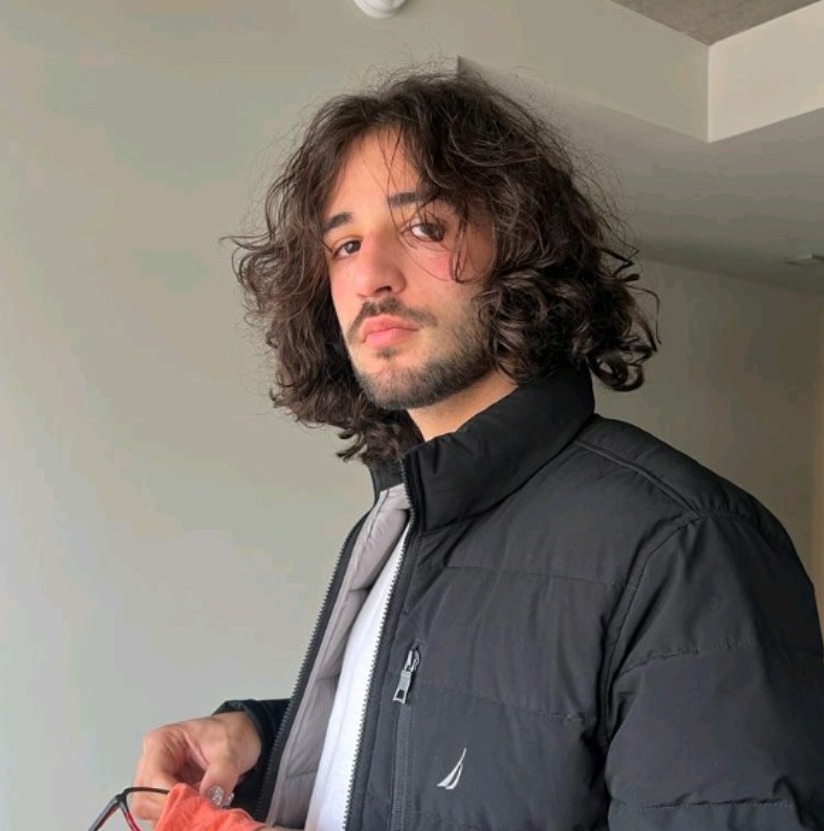
I started the podcast Balkan Threads at Sbunker out of a desire to explore the complexities of Balkan traditions and heritage, with love and the belief that these traditions are shared by all of us. I believe that a deep understanding of centuries of common cultural practices can help counter decades of divisive politics.
My guests are people who help us move beyond political boundaries and national stereotypes. They come from regions of the Balkans known for multiculturalism and coexistence, and their strong regional voices provide insight into the many ways in which the region’s rich cultural and historical layers have shaped the place we call home.
For instance, in the first episode of the podcast, my guest Vernesa and I talked about interfaith relations and identity in Sandzak.
The ability to understand both the cultures native to the Balkans and those introduced from outside centuries ago has helped me feel welcomed everywhere. My curiosity about the linguistic, ethnic, and historical nuances of the two countries I call home has allowed me to navigate the region’s shifting borders with ease, seeing them not as divisions, but as shared challenges we all grapple with.
Beyond that, being aware of the cultures blended into my own has helped me find a sense of home wherever I travel. Walking the streets of Amsterdam, I noticed Germanic words in the northern dialects of Serbo-Croatian and thought of the traditional pepper cookies made in Zagreb.
As I sat in a tea shop in Dar es Salaam in Tanzania, after having gone to a bazaar, I felt at home, because I heard the same greeting people in Sandzak and Bosnia use, and drank the tea from the same copperware which was served to me in Prizren a few years earlier.
To my delight, I learned I already knew some Swahili vocabulary, as the language has many Turkish and Arabic words. I date a Mexican man, and the vibrancy of Mexican traditions echo those my mum always told me of her Adriatic hometown. The Latin traditions of carnivals, siestas and even melancholic and celebratory music connect us across continents.
The guests I chose share stories just as intimate as mine. For them, what they tell us may seem obvious. We, nevertheless, might learn something new about people in our proximity, or even better, they might inspire us to see layers of our identity we overlooked. The takeaway I hope from each episode is that diverse and shared Balkan heritage is a blessing and a connecting point, never a divider.