


































March 15, 2026 came and went without the disruption many had anticipated. At the last moment, Kosovo Prime Minister Albin Kurti announced that the enforcement of the new Law on Foreigners starts as planned but with temporary twelve months residence permits for Serbs living and working in the north, offering what Belgrade and European capitals quickly called a “relief.”
The Law requires individuals entering Kosovo for employment, family reunification, or education to report to the police within 72 hours and obtain a residence permit from the Ministry of Internal Affairs.
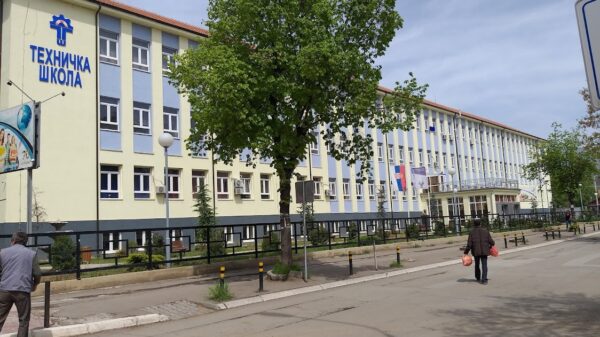
For Serbs holding only Serbian-issued documents, many of whom work in Belgrade-funded institutions, this would mean being reclassified as foreigners in their place of birth.
Hospitals, schools, kindergartens, and administrative offices could also be affected, with around 20,000 people potentially impacted, according to Serbian government estimates.
However, EU Special Representative for the Belgrade-Pristina Dialogue, Peter Sorensen, led intensive talks with the Kosovo government that resulted in a postponement of the Law.
Under the new temporary agreement, Serbian education and health workers, and students can obtain temporary 12-month residence permits, with their existing identity documents recognized in the interim. Sorensen also highlighted the importance of consulting Serbian community representatives to ensure a fair and inclusive process.
The EU played a decisive role in averting the crisis. The outcome is the product of sustained EU diplomacy, proof that when Brussels applies its leverage with purpose, it can produce results.
But this is only a temporary fix. What happens when the permits expire after 12 months?
There is no binding framework to protect Serbian institutions in Kosovo over the long term, and Pristina has shown no intention of creating one.
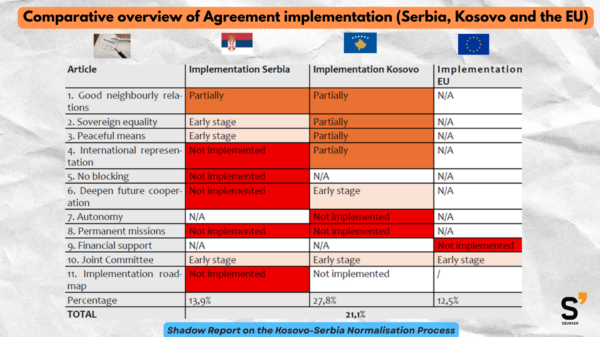
At the same time, the Kurti government has opposed establishing the Association of Serb-Majority Municipalities (ASM) while intensifying pressure on Kosovo Serbs to integrate into Kosovo’s institutions, despite the agreement having been approved by the government, ratified by Parliament, and promulgated by the President.
While Kosovo’s Constitutional Court found some parts of the agreement not in line with the Constitution, it still requires the government to implement the ASM. These are facts that the Kurti government cannot ignore.
In this context, the EU must be determined toward that unresolved obligation.
At the March 14 meeting, just one day before the law was set to enter into force, EUSR Sorensen stated that the EU “has taken note of the plans of the Government of Kosovo to integrate Serbia-supported health and education institutions within the Kosovo framework, fully in line with prior Dialogue agreements and other EU and regional commitments.”
However, the model of implementation remains undisclosed.
The Serb community in Kosovo deserves more than annual negotiations over whether they can keep their jobs or travel freely without repercussions.
Asking the Kosovo government to fulfill its obligations is not unreasonable. No one pressured Pristina to accept the first Brussels Agreement in 2013 or the second Ohrid Agreement in 2023, both of which granted the Kosovo Serb community local autonomy in municipalities where they constitute a majority.
In this context, the high-level dialogue that Kaja Kallas has promised should place the ASM at the center of the agenda. The ASM should not be treated as an afterthought; it is the essential foundation for any lasting normalization between Kosovo and Serbia.
The Kosovo government’s strategy is problematic. Rather than imposing policies that alienate the Serb community, it should engage in dialogue with the community and treat Serbs as equal citizens. This is essential for sustainable normalization and should lead to the establishment of the ASM, as agreed and promised.