


































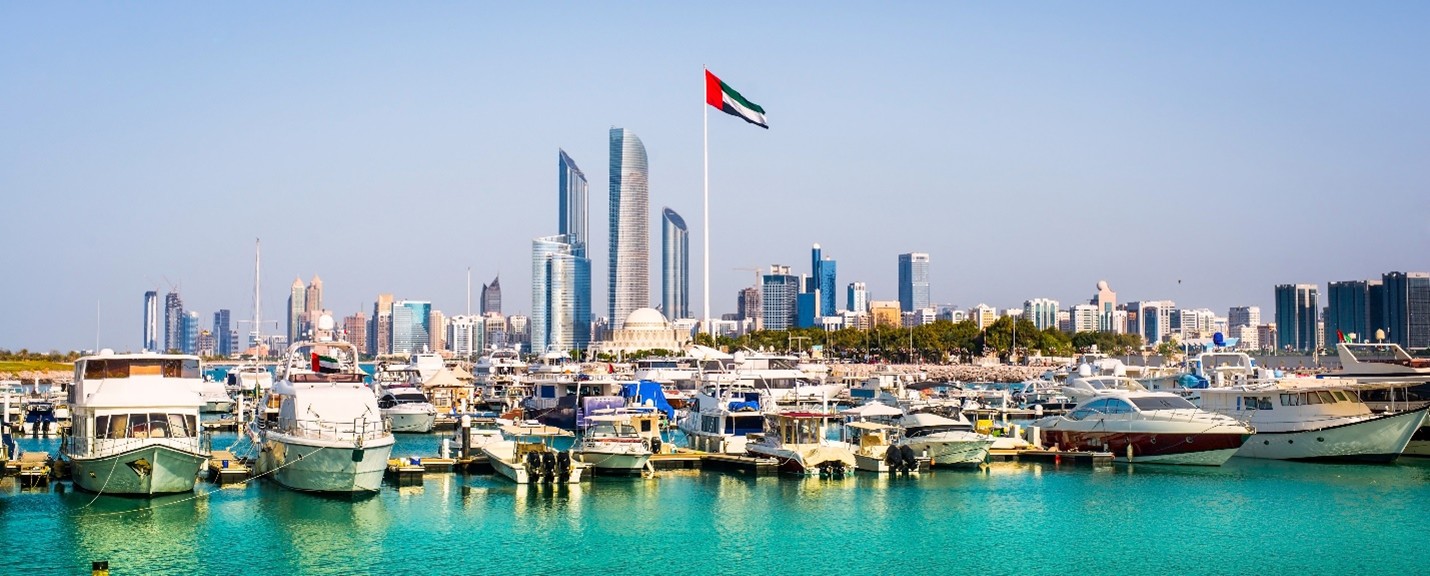
The entry of investors from the United Arab Emirates into Montenegro, led by Mohammed Alabar, raises questions about transparency, protection of space and the state of Montenegro’s compliance with European standards. From Velika Plaža and Šasko Lake, to controversial agreements with the UAE, sponsorships and influence on the media – the Montenegrin public does not have answers to many important questions.
The presence of the United Arab Emirates (UAE) in Montenegro has, in the last few years, acquired a new, more intense and politically sensitive dimension. Through a series of bilateral agreements, preferential arrangements and major investment announcements, the UAE has become one of the most influential external economic actors in the country. At the center of this process today stands Mr. Mohammed Alabar, a globally renowned investor, founder of Emaar Properties and Eagle Hills and a man close to the political leadership of the UAE.
Alabar is not “just another investor” in Montenegro and his actions cannot be viewed separately from the dubious agreements that Montenegro recently signed with the UAE, nor from the broader regional context in which similar investment models have already been implemented, the most famous of which is in Serbia – “Belgrade on Water”. That is why the issue of Alabar’s ambitions in Ulcinj, Velika Plaža and around Lake Šasko goes beyond local development and becomes a question of public interest, institutional resilience and the control the Montenegrin government has over strategic resources.
What does Mr. Alabar want in Montenegro
Mohammed Alabar is known globally as the founder of Emaar Properties, one of the largest development companies in the UAE, and Eagle Hills, a company that develops large real estate and tourism projects in multiple markets, including the Balkans. In the regional context, he is best known for the “Belgrade on Water” project, which has become a symbol of “development” based on privileged arrangements, forced change of spatial planning rules, and strong political support.
The United Arab Emirates is present in Montenegro in the form of several significant investment projects across the country, implemented by their government funds and companies. The most famous is certainly “Porto Montenegro”, a luxurious marina and residential and tourist complex in which the Dubai Investment Fund (ICD), one of the largest UAE investment funds, has long invested. It is one of the most visible investments from the UAE on the Adriatic, attracting international capital and significantly influencing the Montenegrin economy and real estate sector.
The UAE is also visible through the “Drydocks World Dubai” project, which operates a shipyard for repair of luxury yachts in Bijela, as well as through “Masdar”, a state-owned company that co-owns the Krnovo wind farm, one of the most important energy projects in Montenegro.
International economics expert Mladen Grgiç, tells ResPublica that, based on these projects, it cannot be concluded that “the UAE is developing a coherent geopolitical or some kind of ‘grand’ strategy towards Montenegro” and that “it is much more likely that this is a classic model of global portfolio diversification, characteristic of sovereign funds and state-owned companies of the UAE, which use investment opportunities in markets where entry is relatively simple, returns are good, and the regulatory framework is more flexible than in the European Union (EU)”.
“If the UAE has any strategic interest in Montenegro, such interest is indirect and primarily economic in nature. These investments reflect the logic of capital internationalization and sectoral diversification rather than the political ambition for the UAE to influence regional relations in the Western Balkans,” believes Grgić.
Mohammed Alabar’s interest in Montenegro is primarily focused on the Velika Plaža in Ulcinj, the Šasko Lake area and the wider area along the Bojana River. These are areas that are often described in public appearances by investors and government representatives as “untapped and undervalued” potential, while the professional public and environmental organizations recognize them as one of the most valuable remaining natural entities in the country.
Although the specific projects that Alabar was interested in have not yet formally begun, nor is it known what exactly they would entail, visions of large tourist and residential complexes have so far been presented to the Montenegrin public, often wrapped in a narrative of “sustainable” and “green” development. However, a number of open questions remain behind these narratives: on the basis of which spatial plans would construction be carried out, according to which rules would investors be granted access to land of exceptional value, and what would be the ecological and social consequences of these projects.
Alabar’s Eagle Hills Montenegro Montenegro first formally appeared in Montenegro in the spring of 2025, when it was established as a local company and participated in a tender for the lease of beaches in Ulcinj, announcing major development plans. The director of Eagle Hills Montenegro is Hisham Hisham Mohamed Ibrahim Soliman, a manager originally from Egypt, who has been running business operations related to Alabar’s investments for a long time. The formal owner of the company is Jaona Investment LLC, which is the company behind Alabar’s investment activities in the Balkans.
ResPublica contacted Eagle Hills Montenegro and Mohammed Alabar for the purposes of this research, but by the time the text was published, the answers had not arrived.
Velika Plaža and Šasko Lake: A space that cannot be replaced
Architect as well as founder and president of the Martin Schneider-Jacoby Company – MSJA Zenepa Lika warns for ResPublica that in the case of Alabar, these are not ordinary development projects, but direct encroachment on landscapes of international importance.
Velika Plaža, as she points out, represents one of the last true natural treasures of Montenegro and is a complex, vibrant landscape intertwined by dunes, wetlands and the Bojana Delta, which is recognized as a globally significant delta and an area of key importance for biodiversity. In its immediate vicinity is the Ulcinj Salt Pans Nature Park, the most important refuge for migratory and rare birds in this part of Europe.
“When huge projects or investor utopias are announced in that area, reactions are inevitable. Not because we are against development, but because we know what we are losing. We are losing public space, we are losing access to a public good – the sea. We often hear how future projects, especially those around Šaška Lake, will be ‘eco’ and ‘sustainable’ and that there will be ‘attention to space’. But as an architect who has been involved in the protection of natural and cultural heritage for years, I must say that those words do not mean much if there are no concrete, obligations and transparent processes behind them, including clear responsibility towards the public interest”, states Lika.
She explains that, in the case of the investment from the UAE, the whole story relies on a local study of the location from 2012, a plan that is outdated, insufficiently precise and completely out of sync with today’s realities. “In the meantime, climate change has occurred, and the area of Šasko Lake and the wider Ulcinj region has already been recognized as a future Natura 2000 and Emerald. This means that its values have been internationally confirmed, but the plans that are supposed to protect it remain the same as they were more than a decade ago. No one has done a review, no one has updated the documents, because the institutions simply did not understand or did not want to understand the importance of these areas,” Lika believes.
An additional problem is the fact that the land around Šasko Lake is burdened by long-standing disputed privatizations and investigations that have never been fully clarified. “When such a situation is followed by large investment agreements, it is normal for the public to wonder how well-intentioned this development really is and how much it is really aimed at the well-being and strengthening of the local community,” says the architect.
When asked if there is evidence that environmental standards are being circumvented, Lika is direct. “In the case of the projects for Velika Plaža that were presented visually, every parameter of sustainable development is not only violated, but completely ignored. This is a project that has quite justifiably alarmed the whole of Ulcinj, the general public and the NGO sector in Montenegro, because what we have seen is practically erasing the authentic landscape of Velika Plaža and turning it into an artificial, generic ecosystem. Such a concept has no point of contact with the identity of this space, nor with the character of Montenegro as an ecological state. This is exactly the model that architecture and spatial planning must prevent, so that space does not become a product, but remains a value,” Lika points out.
In the area of Šasko Lake, the situation is different for now, says Lika, but no less problematic. “For now, we mostly hear only words of praise and announcements of an ‘ecologically sensitive approach’, which is, of course, something we welcome, but words are one thing, and documents, studies and transparent processes are something completely different. We cannot talk about sustainable development until we see clear plans, until experts and the local community are involved, and until the previous controversies over land that have cast a shadow on that area for years are cleared up. That is why we should insist that both Velika Plaža and Šasko Lake are treated for what they are – unique landscapes and heritage that cannot be restored once it is damaged. If development is not based on the respect for space, heritage and the constitutional obligation for Montenegro to be an ecological state, then it is not development, but a loss that we will all feel for generations.”
Agreements with the UAE could negatively impact Montenegro’s European path
The criticisms do not only apply to the projects, but also to the way in which the agreements between Montenegro and the UAE were adopted.
The Constitutional Court of Montenegro recently concluded a public hearing on the constitutionality assessment of the Law on Ratification of the Agreement on Cooperation in the Field of Tourism and Real Estate Development between the Governments of Montenegro and the UAE from April 2025.
The initiative for the constitutionality assessment was submitted by the member of the Democratic Montenegro party in the Budva Municipal Assembly, Đorđe Zenović and the NGO Center for Protection and Study of Birds (CZIP), with the hearing of the Minister of Public Works, five legal experts and additional opinions, which pointed to complex issues in constitutional, international public and private law, including the possible impact on the property rights of foreigners, which is why the Constitutional Court called on legal experts to provide relevant answers before making a decision. After several hours of discussion, the President of the Constitutional Court announced that the final opinion would be given after a detailed analysis of all the arguments presented, and the public would be informed about it in a timely manner.
Lika reminds that the agreements were adopted in a non-transparent manner, without public debate and without serious expert analysis, which, as she says, is “one of the most dangerous precedents in the state’s relationship with its own space.”
Transparency International EU organization which deals with combating corruption, monitoring EU legislation and protecting the principles of transparency, rule of law and accountability of institutions, especially in the context of public procurement, lobbying and major international agreements, expressed a “serious concern” in May 2025 about the agreement concluded between Montenegro and the UAE, which, they said, was “ratified without adequate mechanisms for protecting transparency and anti-corruption.”
”Article 2.4 of the Agreement stipulates that contracts, programs and subsequent agreements with investors from the United Arab Emirates are exempt from the application of the laws on public procurement, tenders and competition of both countries. This effectively makes it possible to directly award contracts without competitive bidding, thereby undermining the principles of transparency and equal treatment. If such a practice were to be applied, Montenegro would find itself in direct conflict with EU public procurement rules, as well as with the Stabilization and Association Agreement signed between Montenegro and the EU. The European Commission has warned that such exemptions could constitute a breach of EU rules, in particular those guaranteeing fair competition and transparency in public procurement procedures”, the statement of Transparency International EU reads.
Grgić also warns that such arrangements are difficult to fit into the European legal framework. “I am not sure that these arrangements can be consistently integrated into the framework of the European integration. It is much more likely that these are some kind of ‘last-minute’ combinations concluded on the eve of accession, precisely because a significant part of these cooperation models would be difficult to implement or even illegal after joining the European Union (EU). Agreements that bypass competitive procedures, favor individual investors or transfer public resources without open market competition come into direct conflict with EU rules on state aid, public procurement and transparent management of government assets,” Grgić explains.
According to him, this means that “upon accession to the EU, the legal framework will be much more rigid”, and that “the arrangements being signed now would probably not pass through the control mechanisms in Chapters 5 (public procurement), 8 (competition) and 23/24 (rule of law). Therefore, they should be seen as an attempt to implement projects in a short period of time that could not be implemented under European standards”.
Grgić also points out that the very structure of such arrangements with the UAE, focused almost exclusively on tourism with an emphasis on real estate, “does not contribute to the transformation of the economic structure of Montenegro, which is already extremely dependent on sectors with a low degree of diversification”. “Therefore, instead of strengthening compliance with EU policies of sustainable development, transparency and market competition, they actually reproduce patterns that the EU already identifies as restrictive”.
Is “Belgrade on water” threatening to happen to Montenegro?
When asked if there is a risk that the “Belgrade on Water” model will be repeated in Ulcinj, Lika says that this risk is real and serious. “When the same investor comes with a similar development philosophy, and the government simultaneously adopts spatial plans adapted to the investor’s wishes, then the danger of repeating the ‘Belgrade on Water’ model becomes very real. The adoption of the Spatial Plan of Montenegro in a legally disputed and amended version, immediately after the signing of the agreement with the UAE, clearly shows that plans are not made for the space and citizens, but for investors. In the document, even the most environmentally sensitive areas were given ‘spaces for construction’, which is a direct confirmation that the plan was made according to pre-defined interests, and not according to the public interest.”
In parallel with that, Lika also points out, “we see that Eagle Hills, or rather the investor itself, is working intensively on improving its reputation in Ulcinj and wider in Montenegro.”
In recent months, Eagle Hills has increased the number of donations and sponsorships throughout Montenegro, especially in communities where Alabar is interested in future projects. Specific examples include a donation of 215 thousand euros to fire departments in Podgorica, Ulcinj, Kolašin and Žabljak, as well as the NGO “Gorani”, funds for greening of schoolyards in Podgorica, landscaping of a schoolyard in Ulcinj, and sponsorship of the Women’s Handball Club (ŽRK) Budućnost.
“The donations they distribute are symbolic for Eagle Hills, almost insignificant, but for the institutions and organizations in Montenegro that receive them, they represent an important contribution. This is precisely where the weakness of our institutions can be seen: that they do not systematically invest in their institutions, and thus shift the burden of development to private capital. This creates an imbalance and paves the way for investors to present themselves as saviors, even though their donations are a small stake compared to the value of the space they are asking for in return,” notes Lika.
Thus, some of the public opinion is changing. “Citizens want development, and of course they do, because they have been deprived of it for decades. And they are beginning to believe that such an investor can make that happen. I believe it can, but only under one condition: that we should be the ones that will define the direction, not them. The development should be guided by our laws, our plans, our professional standards and the needs of the local community. Not the other way around. Ulcinj, but any other valuable space in Montenegro, must not become a testing ground for architectural experiments, nor a field for concreting under the pretext of ‘development’. We have seen in Belgrade what it looks like when public interest is suppressed, when space becomes a backdrop for grand commercial ambitions and when the identity of the city is erased in favor of profit. This is a path of no return. If construction is going to be done, it must be done in accordance with nature, not against it. Space is not an empty slate to be erased and drawn on, it is a living landscape with an identity and memory. It is our duty to preserve it and develop it thoughtfully, and not to hand it over to be shaped by interests that do not understand its value. We owe this to the space and to the generations to come.”
Media outlets as a new line of influence
A particularly sensitive dimension of Alabar’s activities in Montenegro relates to the media outlets. Since the ideas about his projects in Montenegro began to suffer criticism recently, Alabar and his companies have been regularly sponsored and advertised in the Montenegrin media, with a clear strategy of “soft” pressure. It is obvious that this is not just PR, but a form of informational influence that can influence the editorial policy of the media, silence criticism and create a positive environment for investors from a hostile one.
Former General Director of the Directorate for Media and long-time journalist Nedjeljko Rudović estimates for ResPublica that this action by Alabar is an expected move. “When investments do not have the support of public opinion, the idea is to purchase marketing space to provide a more favorable narrative. This is a globally known practice. Alabar and his managers clearly think that by investing heavily in the purchase of marketing space, they will also ‘buy’ the support of these media,” says Rudović.
Such an approach, he warns, carries a particular risk in a small market like Montenegro. Advertisers often expect critical content to disappear, and if it doesn’t, they withdraw their ads. “This is where the integrity of editorial offices is tested,” says Rudović, also emphasizing that public services must play a key role, especially the Radio and Television of Montenegro (RTCG), which, according to Rudović, has so far not shown enough interest in in-depth analyses of such arrangements. “It is obvious that Alabar is leading offensives on multiple fronts. All of this means that there is a huge benefit at stake, primarily for him, and that he is highly motivated to achieve that benefit. Independent and free media exist precisely to help all of us understand, through in-depth research, whether the society can also have a benefit from his benefits. Or, on the contrary, whether Montenegro can suffer more harm.”
Nëse e krahasojmë me përvojën e “Beogradit mbi Ujë”, paralajmëron Rudoviç, “atëherë është e qartë se shteti nuk përfiton as afër aq sa përfitoi investitori”.
Investor or a mirror of the system
The key problem is not that Mohammad Alabar wants to invest in Montenegro, but rather how the state of Montenegro manages its own space and rules.
Grgić emphasizes that there is currently no real risk of political dependence on the UAE, but that the risk arises the moment the country’s legal system bends in favor of individual arrangements.
“I am not in favor of stigmatizing any investor, nor of pre-identifying the country of origin as a problem. We are not victims, nor has anyone forced us into anything. Therefore, these projects stem from the motivations and political decisions of our elites, and not from any external pressure or geopolitical ambitions of the UAE,” believes Grgić.
He states that at this moment there is no real risk of political dependence on the UAE. “Most of the announced arrangements are still on paper, and their actual implementation, dynamics and content remain uncertain. The problem arises when our side insists on arrangements that bypass standard rules, especially tender procedures and the principles of transparent management of public resources. Avoiding competitive procedures through bilateral agreements is in the interest of certain domestic circles, primarily the Government of Montenegro as the initiator of such processes, and not the UAE.”
The story of Alabar is not just about one investor. It also shows whether Montenegro will build its development on rules, transparency and public interest, or whether it will leave space, institutions and media narrative to capital that demands special treatment. How this story ends will show what kind of country Montenegro wants to be.
The text is part of the “History from the Region” initiative implemented by Res Publica and the Institute for Communication Studies from Macedonia, in collaboration with partners from Montenegro (PCNEN), Kosovo (Sbunker), Serbia (Autonomija), Albania (Euronews), and Bosnia and Herzegovina (Analiziraj.ba), within the “TRACE” project with the support of the British Embassy in Skopje.