































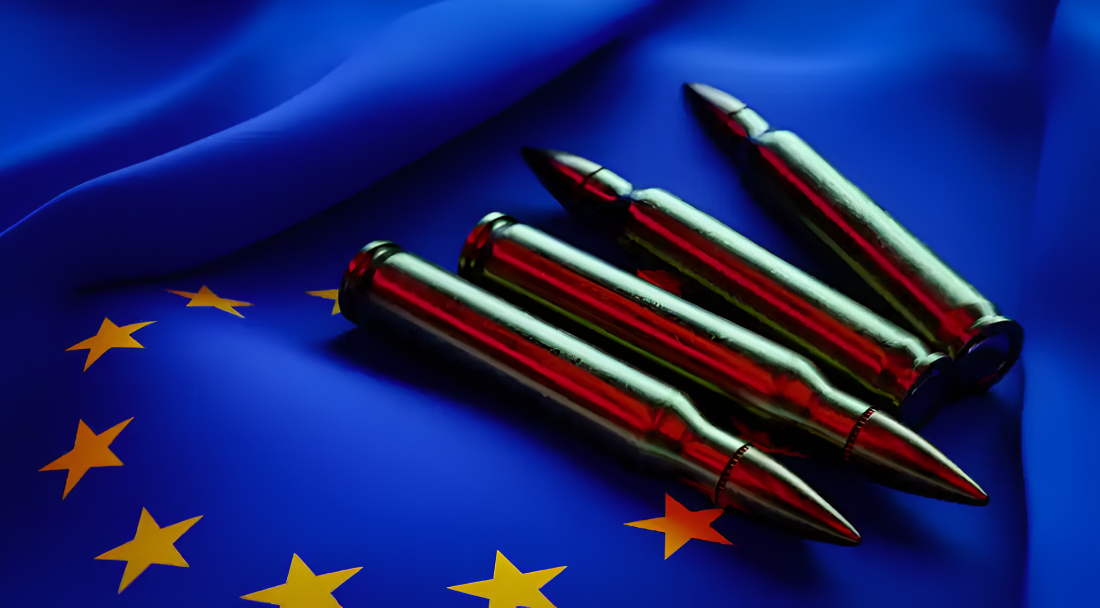
Global security dynamics shifted sharply following Russia’s aggression against Ukraine in 2022. European states accelerated weapons procurement and stockpiling, expanded domestic arms production, and in some cases, such as Croatia and Germany, reintroduced or strengthened mandatory military service.
Although less economically developed than their European counterparts, countries in the Western Balkans have followed similar trends.
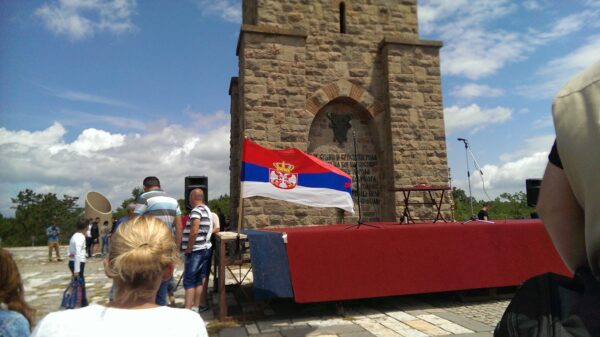
Serbia is widely regarded as the leading military power in the region, given the size of its armed forces, its arsenal, its operational capabilities, and its recent increase in defense spending.
However, this rapid military buildup is taking place under the leadership of Aleksandar Vucic, who is facing significant domestic protests. Critics argue that the expansion of the military may serve political purposes in addition to national defense.
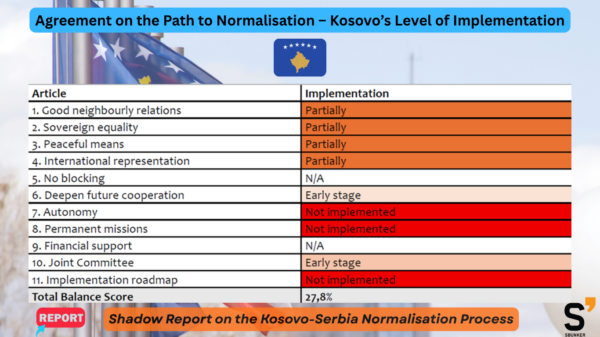
With Serbia’s rapid rearmament unfolding in a fragile political and regional context, stronger EU-led oversight is necessary to prevent military expansion from undermining stability in the Western Balkans, and the Kosovo–Serbia dispute offers a strategic entry point for such engagement.
Rearmament of Serbia
In the past decade, there has been a significant shift in Serbia’s military. It adopted its highest-ever military budget in 2026, reaching $2.7 billion, tripling its budget from a decade ago. A major move in Serbia’s defense policy is the planned reintroduction of mandatory military service in late 2026.
But what is more concerning in terms of regional stability, Serbia’s neighbors and even the international community, besides mandatory service, is what is called a “Frankenstein military.”
The Serbian Armed Forces blend a legacy of 1980s Yugoslav and Soviet equipment with modern, diverse acquisitions from China, Russia, Israel, and France, while simultaneously developing domestic platforms. Due to its hedging foreign policy and military neutrality, Serbia seized the opportunity to procure equipment from multiple global suppliers.
Moreover, Serbia maintains a strong domestic military industrial complex, a legacy of Yugoslavia, that has been modernized in recent years. Arms exports have become a highly profitable sector.
In addition to shipments to Ukraine, which earned Serbia much-needed goodwill with Western governments, some of the more (in)famous buyers have included Israel during its war with Hamas, Armenia and Azerbaijan during their 2020 conflict, as well as several African states.
This positions Serbia as a key security actor in the region, with substantial military capabilities developed primarily for deterrence. However, many observers fear that deterrence may not be the sole objective behind Serbia’s military buildup.
This rapid expansion of military capabilities is happening amid deepening social unrest in Serbia and the attempts of President Aleksandar Vucic to consolidate of power.
At a time marked by weakened democratic institutions, constrained media freedom, and frequent public protests, the strengthening of the armed forces raises concerns about how expanded military capacity may intersect with domestic political pressures and regional security dynamics.
The EU’s Role in Arms Control
The main international organizations with substantial political influence in the Western Balkans are the OSCE, NATO, and the EU.
The OSCE was in charge of monitoring the arms control mechanism – the 1996 Subregional Agreement (otherwise known as the “Florence Agreement”), signed by Croatia, Bosnia and Herzegovina, FR Yugoslavia (Serbia and Montenegro). However, the OSCE stopped the monitoring, in 2015, while the organization itself faces existential challenges and is largely considered redundant.
NATO, on the other hand, is considered the primary security partner for all countries in the region, except for Serbia. Relations between NATO and Serbia have been strained since 1999. Although there is cooperation, Serbia is strongly against joining the alliance and instead proclaimed a policy of military neutrality.
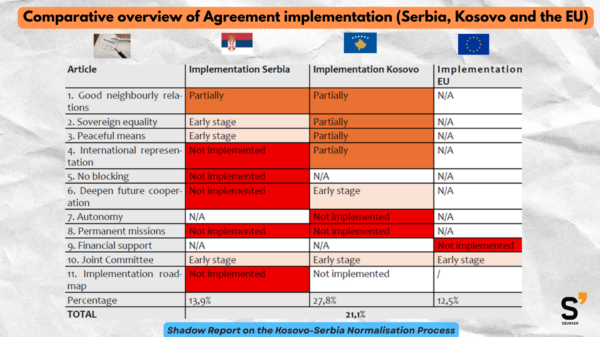
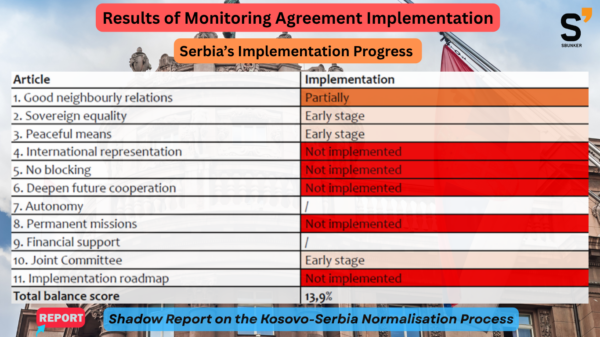
This leaves the EU as the most viable actor to address the security dilemma in the region. While not all Western Balkan countries have strong relations with NATO, all aspire to join the EU. In this context, the Kosovo-Serbia dispute is an excellent opportunity for the EU to get involved, propose a security agreement and establish itself as a crucial arms control institution in the Balkans.
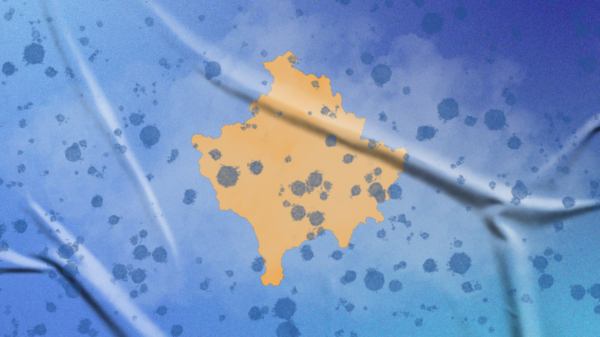
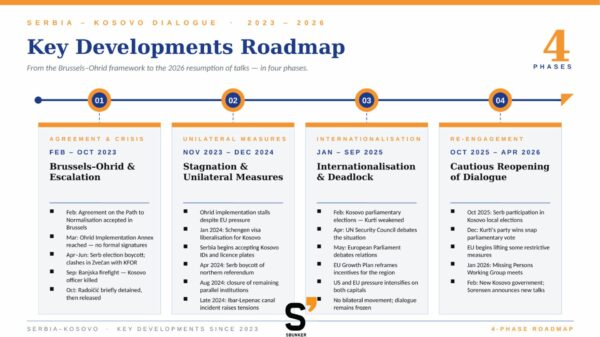
After the Banjska and Ibar-Lepenac attacks in 2024, several low-intensity clashes occurred in the Ground Security Zone between Kosovo and Serbia. In 2025, a group of Kosovo Albanians attacked the Serbian military near Debela Glava, and in 2026 Serbian police were ambushed near Lukovska Banja. These incidents highlight the need to address security concerns urgently.
The EU could build on its current gradual integration approach by starting earlier with the Common Security and Defence Policy (CSDP). More specifically, Western Balkan countries could be progressively included in the Permanent Structured Cooperation (PESCO) and the European Defence Fund (EDF).
Having Western Balkan political representatives sit at the table alongside EU member states would help strengthen trust and cooperation. At the same time, this could ease security tensions and support the creation of additional monitoring mechanisms.
Addressing security challenges in the Western Balkans would strengthen the EU’s credibility and demonstrate that it can effectively manage stability in its immediate neighborhood. Successfully contributing to lasting security in the region would enhance the EU’s reputation as a reliable geopolitical actor and reinforce its image as a serious and capable partner in peace-building efforts, including in Ukraine.