



































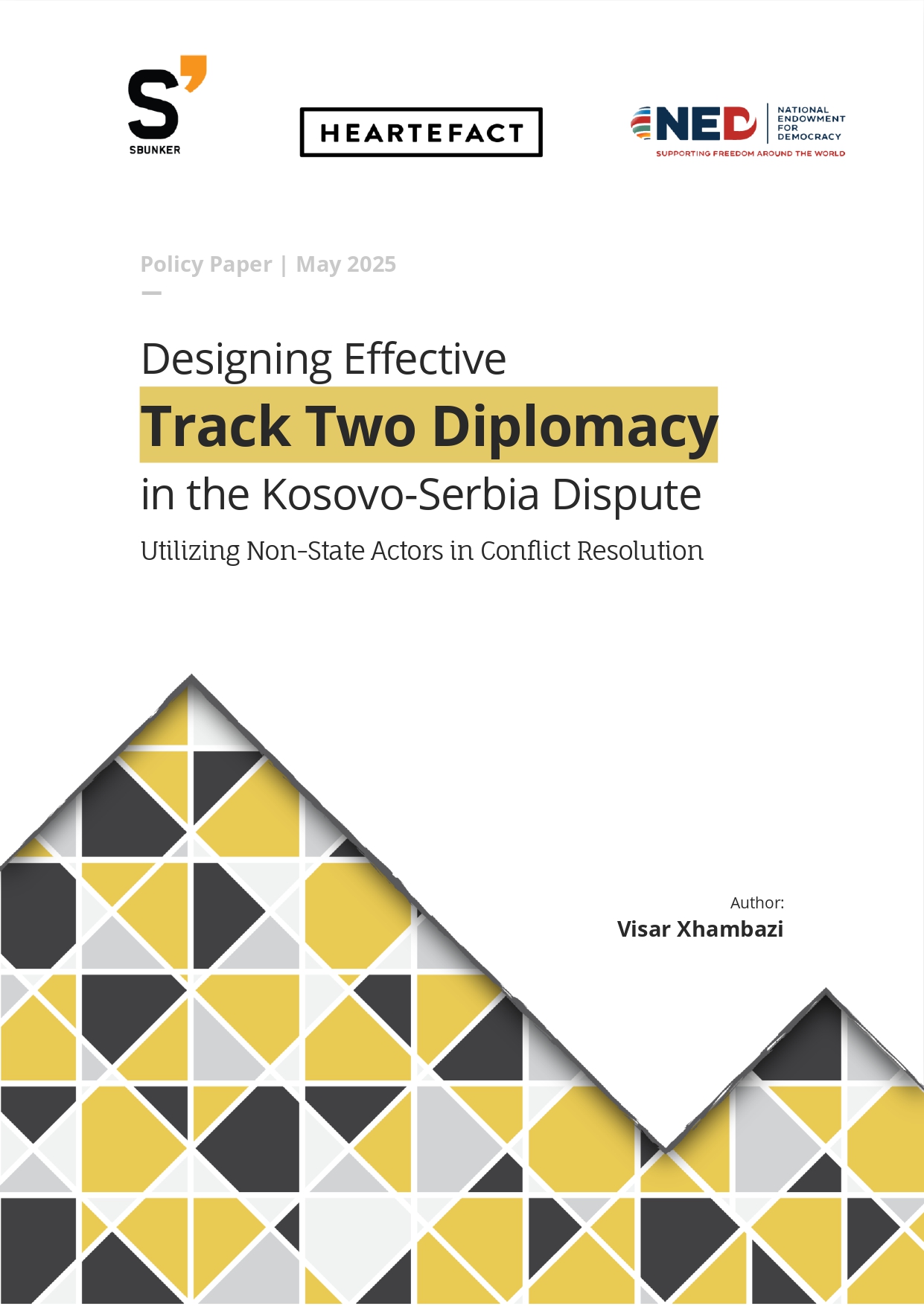
The paper acknowledges previous attempts to establish Track Two Diplomacy in the Kosovo-Serbia dispute. However, these attempts, generally made through civil society coalitions and consortiums, have struggled to achieve the desired results and have been largely unsustainable due to their project-driven nature, limited funding, and dependence on specific timelines, among other obstacles.
Thus, this paper aims to recognize the advantages and disadvantages of Track One and Track Two Diplomacy and propose specific recommendations on how to effectively utilize non-state actors who can directly contribute to the normalization of relations.
By building on necessary prerequisites, the paper seeks to challenge the prevailing status quo of the Kosovo-Serbia Dialogue by highlighting the complementary advantages of Track Two.
It proposes tools and mechanisms to implement an effective and suitable Track Two framework to introduce new ideas, establish trust, influence decision-makers, and create a sense of possibility that could change the macro-dynamics of the Kosovo-Serbia dispute and move the adversaries closer to conflict resolution and reconciliation.
Click here to access the full document: Designing Effective Track Two Diplomacy in the Kosovo-Serbia Dispute